

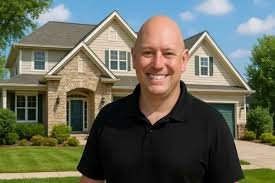
Sarah Martinez had been renting in Richmond’s Museum District for three years, watching home prices climb while her savings account seemed to stand still. With a modest credit score and less than $10,000 saved, she assumed homeownership was years away. Then a colleague mentioned FHA loans, and everything changed. Within two months, Sarah was holding keys to a charming bungalow in Henrico County—proof that the right financing can turn “someday” into “today” faster than you might think.
FHA loans are government-backed mortgages insured by the Federal Housing Administration, designed specifically to make homeownership accessible to more Americans. For Virginia buyers—whether you’re eyeing a historic row house in Fredericksburg, a coastal property in Virginia Beach, or a family home in Chesterfield—FHA financing often provides the most realistic path to your first home purchase.
As Virginia’s Mortgage Broker of the Year, Powerhouse Mortgages has guided hundreds of homebuyers through the FHA process across the Commonwealth. We work with hundreds of lenders to find competitive rates and terms that fit your situation. And here’s something most buyers don’t know: you can explore your FHA options through our NoTouch Credit PreQual process without any impact to your credit score. No hit, no obligation—just clear answers about what you qualify for.
The Building Blocks: Credit Score and Down Payment Thresholds
Let’s start with the two numbers that determine your FHA eligibility: your credit score and your down payment percentage. These work together in a straightforward formula that opens doors for buyers who might not qualify for conventional financing.
The baseline requirement is simple. With a credit score of 580 or higher, you can qualify for an FHA loan with just 3.5% down. If your score falls between 500 and 579, you’ll need to bring 10% to the table. Scores below 500 typically don’t qualify for FHA financing, though there are paths to rebuild credit and reapply.
Here’s what those percentages look like in real Virginia dollars. In Henrico County, where the median home price hovers around $350,000, a 3.5% down payment means bringing $12,250 to closing. In more affordable markets like Spotsylvania, where you might find solid homes around $280,000, that same 3.5% drops to $9,800. Even in pricier Hampton Roads submarkets, where homes can reach $400,000, you’re looking at $14,000 down—significantly less than the 20% ($80,000) required for many conventional loans.
This is where Powerhouse Mortgages’ NoTouch Credit PreQual becomes invaluable. Many Virginia buyers don’t know their exact credit score or worry that checking will hurt their chances. Our process lets you discover exactly where you stand without triggering a hard inquiry that would lower your score. You get clear answers about whether you qualify for the 3.5% or 10% down payment tier, all while protecting your credit profile for the actual mortgage application.
The credit score requirement is more flexible than you might expect. Unlike conventional loans that often demand scores in the 620-680 range, FHA lending recognizes that credit challenges don’t necessarily predict your ability to make mortgage payments. A medical bill from two years ago or a rough patch during the pandemic won’t automatically disqualify you.
What matters more than a perfect history is demonstrating responsible financial behavior recently. If you’ve had credit issues in the past but have maintained clean payment records for the past 12-24 months, FHA underwriters will consider that positive trend. This forward-looking approach has helped countless Virginia families in Glen Allen, Midlothian, and across the state move from renting to owning.
One practical strategy for Virginia buyers on the cusp: if your score sits at 575, investing a few months in credit improvement to cross the 580 threshold can save you thousands. The difference between a 10% and 3.5% down payment on a $300,000 home is $19,500—money that could instead go toward furnishing your new home or building an emergency fund.
Income, Employment, and Debt-to-Income Standards
Your income tells lenders whether you can afford the monthly payments. FHA guidelines look at employment stability and your debt-to-income ratio—the percentage of your gross monthly income that goes toward debt obligations.
Employment history typically needs to show two years in the same field or line of work. Notice that’s “same field,” not necessarily the same employer. If you’ve been a registered nurse in Virginia for three years but switched from VCU Health to a private practice in Charlottesville, that continuity counts. You’re demonstrating stable earning capacity in your profession.
The debt-to-income calculation comes in two parts. Your front-end ratio looks at housing costs alone—mortgage principal and interest, property taxes, homeowners insurance, and mortgage insurance—divided by your gross monthly income. This typically shouldn’t exceed 31%. Your back-end ratio includes all monthly debt obligations—housing costs plus car loans, student loans, credit card minimum payments, and any other recurring debts—and generally caps at 43%.
Here’s a real-world example for a Virginia buyer. Let’s say you earn $5,000 monthly gross income. A 31% front-end ratio means your total housing payment shouldn’t exceed $1,550. For the 43% back-end ratio, your total monthly debts including housing shouldn’t surpass $2,150. If you have a $300 car payment and $200 in student loan payments, that leaves $1,650 for your housing payment while staying within guidelines.
But here’s where FHA shows flexibility that surprises many buyers. These ratios aren’t absolute walls. If you have compensating factors—a large down payment, substantial cash reserves, minimal other debt, or a strong credit history—underwriters can approve higher ratios. Some Virginia buyers have successfully qualified with back-end ratios above 50% when other aspects of their financial profile were particularly strong.
Documentation requirements are straightforward for W-2 employees. You’ll need your two most recent pay stubs, W-2 forms from the past two years, and your most recent two years of tax returns. Lenders verify this information directly with your employer and the IRS, so accuracy matters more than perfection.
Self-employed Virginia borrowers face additional documentation but can absolutely qualify for FHA loans. You’ll need two years of personal tax returns, business tax returns if you own more than 25% of a company, and a year-to-date profit and loss statement. Lenders average your income over the two-year period, so if your business is growing, your most recent year’s higher earnings help offset a slower prior year.
For Virginia’s many small business owners—whether you run a contracting business in Hanover, operate a restaurant in Williamsburg, or freelance in tech from your home office in Ashland—this self-employment flexibility opens doors. Working with a mortgage broker who understands how to present self-employed income in the strongest light can make the difference between approval and denial.
Property Standards and FHA Appraisal Essentials
FHA loans come with property requirements that protect both you and the lender. The home must meet Minimum Property Requirements focused on safety, security, and structural soundness. This isn’t about aesthetics—it’s about ensuring the property is livable and won’t require immediate major repairs.
The FHA appraisal goes deeper than conventional appraisals. The appraiser evaluates the home’s condition, looking for issues that could affect safety or livability. Peeling paint in homes built before 1978 raises lead paint concerns. A roof with less than two years of remaining life typically needs replacement or repair before closing. Faulty electrical systems, plumbing issues, or structural problems must be addressed.
Virginia’s diverse housing stock means these requirements play out differently across the state. In Richmond’s historic neighborhoods, older homes with original features sometimes need updates to meet current FHA standards. A charming 1920s home in the Fan District might have outdated electrical that needs upgrading. In Hampton Roads‘ coastal areas, properties may show wear from salt air exposure that requires attention. Rural homes in Louisa or Caroline County might have well and septic systems that need certification.
Common appraisal issues Virginia buyers encounter include missing handrails on stairs, damaged or deteriorating roof shingles, foundation cracks that suggest structural movement, and HVAC systems at the end of their useful life. The good news is these issues don’t kill the deal—they simply need to be resolved before closing, either by the seller making repairs or through repair escrows in some cases.
One critical FHA requirement: the property must be your primary residence. You’re buying a home to live in, not an investment property to rent out or a vacation home for occasional use. You’ll need to occupy the property within 60 days of closing and maintain it as your primary residence for at least one year. This makes FHA perfect for Virginia families relocating to Fredericksburg for work, first-time buyers settling in Chesterfield, or anyone ready to establish roots in communities from Roanoke to Chesapeake.
The primary residence requirement actually works in your favor. It means you’re competing in the owner-occupied market, not against cash investors. In competitive Virginia markets like Short Pump or Glen Allen, sellers often prefer offers from buyers who’ll become neighbors and community members rather than absentee landlords.
Navigating Appraisal Challenges
When an FHA appraisal identifies required repairs, you have options. Sellers can complete the work before closing. You can negotiate a price reduction to cover repair costs. In some cases, a repair escrow can be established where funds are held to complete work after closing, though this approach has limitations.
Working with an experienced Virginia mortgage broker means having someone who’s seen these scenarios hundreds of times. We know which issues are negotiable, which repairs can be completed quickly, and how to keep your transaction moving forward when appraisal surprises emerge. Our relationships with local contractors across Virginia—from Albemarle to Stafford—can help coordinate repairs efficiently when needed.
Virginia-Specific FHA Loan Limits for 2026
FHA loan limits vary by county and are set annually by the Department of Housing and Urban Development. These limits represent the maximum amount you can borrow through an FHA loan in each area, based on local housing costs and market conditions.
For 2026, most Virginia counties fall under the standard FHA loan limit for single-family homes. However, some higher-cost areas have elevated limits that reflect their more expensive housing markets. This matters because if you’re buying a home that exceeds your county’s FHA limit, you’ll either need a different loan type or must bring a larger down payment to keep the loan amount within FHA boundaries.
In the Richmond metro area—including Henrico, Chesterfield, and Hanover counties—FHA limits typically accommodate the majority of homes on the market. A buyer in Midlothian or Short Pump will find that most properties priced for first-time buyers fall comfortably within FHA financing range. The same holds true for Fredericksburg and surrounding Spotsylvania and Stafford counties, where FHA limits align well with median home prices.
Hampton Roads presents an interesting landscape. Virginia Beach, Chesapeake, Newport News, and Suffolk each have their own FHA limit designations. Coastal properties and homes in premium neighborhoods may approach or exceed limits, while the broader market remains well within FHA territory. A buyer looking at a $450,000 home in an upscale Virginia Beach neighborhood needs to verify current limits, while someone purchasing a $320,000 property in Chesapeake typically has no concerns.
Charlottesville and Albemarle County sometimes see higher limits due to the area’s elevated housing costs relative to population size. The university’s influence on the local market and limited inventory can push prices higher, which HUD recognizes in its annual limit calculations. Buyers in this market benefit from checking current limits early in their home search to understand their purchasing power.
Rural Virginia counties—Louisa, Goochland, Caroline County, and areas around Lake Anna—generally have lower median home prices that fall well within standard FHA limits. These markets offer excellent opportunities for FHA buyers to find spacious properties with land at prices that leave room in the budget for the lifestyle benefits of rural living.
One advantage of working with Powerhouse Mortgages is our access to hundreds of lenders across Virginia, Florida, Tennessee, and Georgia. If you’re purchasing near an FHA loan limit or in a unique property situation, we can explore options across our lender network to find the best fit. Some lenders offer more flexibility with limit exceptions or have specialized programs for specific Virginia markets.
Loan limits also affect buyers considering multi-unit properties. FHA loans can finance two-, three-, and four-unit properties if you’ll occupy one unit as your primary residence. The loan limits increase with the number of units, recognizing the higher purchase prices of multi-family buildings. This creates opportunities for Virginia buyers in areas like Richmond or Roanoke to purchase a duplex, live in one unit, and rent the other to offset their mortgage payment.
Mortgage Insurance: What Virginia Borrowers Should Expect
FHA loans require mortgage insurance that protects lenders against default risk. This insurance is what allows lenders to offer FHA loans with lower down payments and more flexible credit requirements. Understanding the cost structure helps you budget accurately for homeownership.
Mortgage insurance comes in two forms for FHA loans. The Upfront Mortgage Insurance Premium is 1.75% of your loan amount, due at closing. On a $300,000 loan, that’s $5,250. Most buyers choose to finance this cost into their loan rather than paying it in cash, which means you’re borrowing $305,250 instead of $300,000. This keeps your cash available for down payment, closing costs, and moving expenses.
Annual Mortgage Insurance Premiums are paid monthly as part of your mortgage payment. The rate varies based on your loan amount, loan-to-value ratio, and loan term. For most Virginia buyers putting 3.5% down on a 30-year loan, the annual MIP rate typically runs 0.55% of the loan amount, divided into monthly payments. On that same $300,000 loan, you’d pay approximately $137.50 monthly for mortgage insurance.
Here’s the part that surprises many buyers: unlike conventional loans where mortgage insurance can be cancelled once you reach 20% equity, FHA’s annual MIP generally remains for the life of the loan if you put down less than 10%. If you put down 10% or more, MIP drops off after 11 years. This long-term cost is worth considering in your overall financing strategy.
For Virginia homeowners, this creates a refinancing opportunity down the road. Once you’ve built sufficient equity—typically 20% or more—and your credit has strengthened, you can refinance from your FHA loan into a conventional loan without mortgage insurance. Many Virginia homeowners follow this path: use FHA to get into the home with minimal down payment, build equity through appreciation and principal payments, then refinance to eliminate mortgage insurance and reduce their monthly payment.
Virginia’s strong real estate markets in areas like Henrico, Chesterfield, and Hampton Roads have shown consistent appreciation in recent years. A buyer who purchases today with 3.5% down might find themselves with 15-20% equity within three to five years through a combination of market appreciation and mortgage paydown. At that point, refinancing becomes a smart financial move that eliminates the monthly MIP cost.
The mortgage insurance cost should be weighed against the alternative. Waiting to save a 20% down payment for a conventional loan without mortgage insurance might take years—during which you’re paying rent with no equity building, and home prices may continue rising. For most Virginia buyers, paying MIP while owning and building equity beats renting while saving for a larger down payment.
Your Path Forward: Getting FHA-Ready in Virginia
Preparing for an FHA loan doesn’t require perfection—it requires organization and realistic planning. Start by gathering your financial documentation: recent pay stubs, two years of W-2s and tax returns, bank statements showing your down payment funds, and a list of your current monthly debt obligations.
Check your credit reports from all three bureaus for accuracy. Dispute any errors you find, as correcting mistakes can boost your score. If your score sits just below 580, focus on paying down credit card balances and ensuring all bills are current. Even small improvements can move you into the 3.5% down payment tier.
Calculate your debt-to-income ratio using the formula we discussed earlier. If you’re borderline, consider paying off small debts entirely or increasing your income through a raise, promotion, or additional work. Remember that lenders average self-employed income, so if you had a strong recent year, gather documentation that demonstrates your earning trajectory.
Research Virginia neighborhoods within your budget. FHA loan limits vary by county, so understanding what you can borrow in your target area helps focus your home search. A buyer might discover that moving from Charlottesville to nearby Louisa County dramatically increases purchasing power, or that Chesterfield offers better value than certain Richmond neighborhoods.
This is the perfect time to start with Powerhouse Mortgages’ free NoTouch Credit PreQual. You’ll get clear answers about your FHA eligibility, estimated purchasing power, and potential monthly payments—all without any impact to your credit score. No hard inquiry, no obligation, just the information you need to make informed decisions about your homebuying timeline.
Our PreQual process also reveals whether you might benefit from exploring other loan options. While FHA is excellent for many Virginia buyers, our access to hundreds of lenders means we can compare FHA against VA loans for eligible veterans, USDA loans for rural properties, or conventional options if your credit and down payment position you for better terms. You might start thinking FHA is your only path and discover you have multiple strong options.
Once you’re prequalified, connect with a real estate agent experienced in your target Virginia market. Let them know you’re FHA-approved so they can guide you toward properties likely to meet FHA property standards. An agent familiar with FHA transactions will help you avoid homes with obvious appraisal issues and can negotiate effectively when inspection items arise.
Timeline matters in Virginia’s competitive markets. Getting your financial documentation organized, running your NoTouch PreQual, and securing full preapproval before you start seriously house hunting puts you in position to move quickly when you find the right property. In markets like Short Pump, Glen Allen, or Virginia Beach where good homes move fast, being ready to write a strong offer within 24 hours can make the difference between getting your dream home and watching it go to another buyer.
Taking Your First Step Toward Virginia Homeownership
FHA loans have opened the door to homeownership for countless Virginia families who thought buying was years away. From young professionals in Richmond to growing families in Fredericksburg, from military veterans transitioning to civilian life in Hampton Roads to empty-nesters downsizing in Charlottesville—FHA financing makes the dream accessible with lower down payments and flexible credit requirements that reflect real life, not just perfect numbers.
The key is working with a mortgage partner who understands both FHA guidelines and Virginia’s diverse real estate markets. As Mortgage Broker of the Year, Powerhouse Mortgages brings expertise earned through hundreds of successful FHA transactions across the Commonwealth. We know which lenders offer the most competitive FHA rates for Virginia properties. We understand how to navigate appraisal challenges in older Richmond homes, coastal Virginia Beach properties, and rural Caroline County estates. We’ve helped buyers in every corner of Virginia—from Roanoke to Lynchburg, from Williamsburg to Yorktown—achieve homeownership through smart FHA financing.
Our relationship with hundreds of lenders means we’re not limited to a single institution’s guidelines or rate sheet. We shop your scenario across our network to find the best combination of rate, terms, and service for your specific situation. One lender might excel with self-employed borrowers, another might offer better pricing for higher credit scores, and a third might have specialized experience with Virginia’s unique property types. You get the benefit of that competition without the hassle of applying with multiple lenders yourself.
The NoTouch Credit PreQual process eliminates the biggest barrier that stops many buyers from even exploring their options: fear of damaging their credit score. You can discover exactly what you qualify for, what your estimated monthly payment would be, and what price range to focus your home search on—all without any credit impact. It’s information without obligation, clarity without commitment.
Whether you’re eyeing a renovated bungalow in Henrico, a new construction home in Spotsylvania, a historic property in downtown Fredericksburg, or a coastal retreat in Chesapeake, FHA financing can help you get there. The 3.5% down payment requirement is achievable. The credit score minimums are realistic. The property standards protect your investment. The loan limits accommodate most Virginia markets. And the process, while detailed, is navigable with the right guidance.
Your next step is simple. Learn more about our team and start your free NoTouch Credit PreQual today. No credit hit, no pressure, just honest answers about your path to Virginia homeownership. In less time than you might think, you could be holding keys to your own home—just like Sarah in Richmond, and hundreds of other Virginia buyers who discovered that FHA loans turn “someday” into “welcome home.”

