

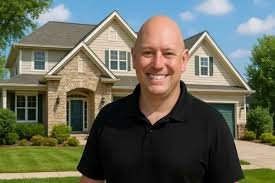
You’ve been scrolling through listings in Goochland, imagining weekend mornings on your own front porch overlooking rolling Virginia hills. Or maybe you’ve fallen in love with a charming property near Lake Anna, picturing summer evenings by the water. There’s just one problem: saving for a down payment feels impossible when rent keeps climbing.
Here’s what most Virginia homebuyers don’t know: you might qualify for 100% financing with zero down payment through a USDA loan. And we’re not talking about remote farmland—areas like Ashland, Caroline County, Louisa, and even parts of Spotsylvania qualify for this powerful program.
The catch? Most big national lenders like Rocket Mortgage or Freedom Mortgage don’t prioritize USDA loans because they require extra paperwork. They’d rather push you toward conventional financing with 20% down or FHA loans with mortgage insurance that costs more than USDA’s fees. When you work with a local Virginia mortgage broker who has access to hundreds of lenders, you get someone who actually knows which properties qualify and which lenders offer the best USDA rates.
This guide walks you through the exact process of securing a USDA loan in Virginia—from verifying your dream property qualifies to holding the keys on closing day. No generic advice that applies to Kansas or Kentucky. This is Virginia-specific guidance that addresses the unique opportunities in our state’s rural and suburban communities.
Step 1: Verify Your Virginia Property Falls in a USDA-Eligible Zone
Before you fall in love with a property, spend five minutes checking if it qualifies for USDA financing. The USDA maintains an online eligibility map at eligibility.sc.egov.usda.gov where you can enter any Virginia address and get instant results. This simple step saves heartbreak later.
Here’s what surprises most Virginia buyers: USDA-eligible doesn’t mean you’re buying a farm in the middle of nowhere. Many suburban and small-town properties qualify. Goochland, Louisa, Caroline County, and rural areas around Lake Anna consistently show as eligible. Parts of Hanover County qualify. The outskirts of Spotsylvania and rural sections of Albemarle often make the cut. Even some areas near Ashland that feel suburban fall within USDA boundaries.
The designation is based on population density, not how the area feels. A neighborhood with houses on half-acre lots and a 15-minute drive to shopping might still qualify if the population density meets USDA thresholds. This opens up far more options than most buyers expect.
When you check the map, you’ll see properties marked as eligible or ineligible. Pay attention to exact boundaries—one side of a road might qualify while the other doesn’t. If you’re working with a real estate agent, share the USDA map with them so they can focus your search on eligible properties.
At Powerhouse Mortgages, we verify eligibility as part of our Free NoTouch Credit PreQual process. You send us an address, we confirm USDA status within hours, and your credit score stays completely protected. Compare this to calling Rocket Mortgage or Movement Mortgage, where they’ll pull your credit before telling you if the property even qualifies. That hard inquiry drops your score 5-10 points before you’ve learned anything useful.
The Virginia counties with the most USDA-eligible territory include Caroline County, Louisa, Goochland, and rural sections of Spotsylvania. If you’re looking near Charlottesville, the outskirts of Albemarle County offer excellent options. Around Lynchburg and Roanoke, suburban areas just outside city limits frequently qualify. The key is checking specific addresses rather than assuming entire counties are in or out.
Success indicator: You’ve identified 3-5 properties in your price range that show as USDA-eligible on the map, and you’ve confirmed this status with your lender before scheduling showings.
Step 2: Confirm Your Income Meets Virginia USDA Limits
USDA loans target low-to-moderate income households, but “moderate income” might be higher than you think. For most Virginia counties, the limit sits around 115% of the area median income. In practical terms, a household of four in many Virginia counties can earn up to $110,000 or more and still qualify. The exact limit varies by county and household size.
Here’s the critical distinction that trips up buyers: USDA looks at household income, not just the borrowers’ income. If your adult son lives with you and earns $40,000, that counts toward the household total even if he’s not on the loan. Your college-age daughter’s part-time job income counts if she lives at home. This is where many applicants get surprised during underwriting.
Virginia’s income limits differ across regions. Caroline County has different thresholds than Albemarle County. Louisa differs from Spotsylvania. Before you invest time in the application process, verify your specific county’s limits. The USDA website lists current limits by county, or your lender should provide this information immediately.
What counts as income? Your base salary, bonuses, commission income, rental property income, retirement income, and any other regular income sources. What doesn’t count? One-time windfalls, gifts, and most types of public assistance. If you’re self-employed, USDA uses your tax return income after business deductions, which sometimes works in your favor.
The biggest mistake we see: buyers assume they make too much and never explore USDA financing. A couple earning $95,000 combined might think they’re over the limit, but in their Virginia county with their household size, they’re well within bounds. The second biggest mistake: not disclosing household members’ income upfront, leading to denial after weeks of processing.
This is where working with a Virginia-focused mortgage broker makes a tangible difference. National lenders like Veterans United or C&F Mortgage Corporation run your information through generic calculators that might not reflect Virginia’s specific county limits. They may tell you that you don’t qualify when you actually do, or worse, they may tell you that you qualify and then discover the error weeks later.
At Powerhouse Mortgages, we know Virginia’s county-by-county limits because we work with USDA loans regularly across the state. We calculate your household income correctly from day one, considering all members and income sources. Our Free NoTouch Credit PreQual includes income verification without the credit hit, so you know where you stand before formally applying.
Success indicator: You’ve confirmed your household income falls below your county’s USDA limit, and you’ve disclosed all household members’ income sources to your lender for accurate pre-qualification.
Step 3: Get Pre-Approved Without Damaging Your Credit
Let’s talk about the difference between pre-qualification and pre-approval, because it matters significantly when you’re competing for Virginia properties. Pre-qualification is an estimate based on information you provide. Pre-approval means a lender has verified your income, assets, and credit, and committed to lending you a specific amount.
Most Virginia sellers and their agents want to see pre-approval letters, not pre-qualification. A pre-approval signals you’re a serious buyer who can actually close. For USDA loans specifically, having pre-approval demonstrates that a lender has confirmed both your financial qualifications and the property’s USDA eligibility.
Here’s where the process gets tricky with traditional lenders. When you call Rocket Mortgage, Movement Mortgage, or Freedom Mortgage for USDA pre-approval, their first step is pulling your credit. That hard inquiry immediately impacts your score. If you’re shopping rates across multiple lenders—which you absolutely should—you could see multiple hard pulls unless they all happen within a 14-day window.
Powerhouse Mortgages approaches this differently with our Free NoTouch Credit Solution. We start with a soft pull that doesn’t affect your credit score at all. We verify your income, review your financial situation, and determine which of our hundreds of lenders offers the best USDA loan terms for your specific scenario. Only when you’re ready to move forward with a specific lender do we authorize a hard credit pull.
This matters because credit scores directly impact your interest rate. A 720 score gets better terms than a 680 score. If shopping around drops your score from 720 to 705, you’ve just cost yourself money on every monthly payment for the next 30 years. Our approach protects your score while still giving you the competitive advantage of comparing multiple lenders’ offers.
For USDA loan pre-approval, you’ll need to provide several documents. Gather your last two years of tax returns, your most recent two pay stubs, two months of bank statements for all accounts, and photo ID. If you’re self-employed, you’ll need two years of business tax returns and possibly a year-to-date profit and loss statement. If you receive rental income, bring lease agreements and documentation of consistent payment.
The verification process typically takes 3-5 business days once you’ve submitted complete documentation. Your lender reviews everything, runs credit (with your permission), and issues a pre-approval letter stating the maximum loan amount you qualify for. This letter is gold when you’re making offers on Virginia properties—it shows sellers you’re not wasting their time.
With access to hundreds of lenders through our broker network, we’re not limited to one bank’s USDA loan program. NFM Lending might offer the best rate for your credit profile, while CrossCountry Mortgage might have better terms for your income situation. We shop your scenario across multiple lenders to find the optimal fit. Compare this to working directly with Guild Mortgage or Atlantic Bay Mortgage, where you get one option: their USDA program at their rate.
Success indicator: You have a pre-approval letter in hand from a reputable lender, your credit score remains protected, and you know exactly how much home you can afford with USDA financing in your target Virginia area.
Step 4: Find Your USDA-Eligible Virginia Home
Now comes the fun part: house hunting. But USDA loans come with specific property requirements beyond just location eligibility. The home must be your primary residence—no investment properties or vacation homes. It must be modest in size and design for the area. It needs to meet basic safety and livability standards.
The “modest” requirement sometimes confuses buyers. USDA doesn’t want to finance mansions, but they’re not limiting you to tiny houses either. A 2,000-square-foot home on an acre in Caroline County is perfectly fine. A 3,000-square-foot home in rural Louisa likely works. The key is that the property fits the character of the area. An 8,000-square-foot estate with a pool, tennis court, and guest house probably won’t qualify, even in an eligible zone.
Work with a real estate agent who understands USDA requirements. Not all agents are familiar with these loans, especially if they primarily work in Richmond, Virginia Beach, or other metro areas where USDA loans are rare. An agent experienced with rural and suburban Virginia properties will steer you toward homes that meet USDA standards.
Hot USDA-eligible areas in Virginia offer excellent value right now. The outskirts of Charlottesville in Albemarle County provide beautiful properties with reasonable commutes to the city. Areas around Lynchburg offer affordable homes with mountain views. Suburbs outside Roanoke combine small-town charm with access to city amenities. Caroline County and Louisa consistently deliver strong value for buyers—you get more house and land for your money compared to metro areas.
During home tours, pay attention to the property’s condition. USDA appraisers look for safety issues: peeling paint on homes built before 1978 (lead paint concern), faulty electrical systems, roof damage, plumbing problems, and structural issues. Minor cosmetic issues are fine—you can repaint rooms and update fixtures after closing. But major safety or structural problems will need to be addressed before USDA approves the loan.
The property must have safe drinking water and adequate sewage disposal. If it’s on well and septic (common in rural Virginia), those systems must be functioning properly and meet local health department standards. If the home has an unusual heating system or lacks heating altogether, that’s a problem. USDA wants to ensure the property is safe and livable year-round.
One advantage of working with Powerhouse Mortgages: we know which Virginia properties are likely to sail through USDA appraisal and which might face challenges. We’ve financed USDA loans across Goochland, Spotsylvania, Hanover, and dozens of other Virginia locations. When you send us a listing, we can often spot potential issues before you make an offer, saving you time and disappointment.
Success indicator: You’ve found a property in a USDA-eligible Virginia location that meets program requirements, and you’re ready to make an offer with your pre-approval letter supporting your bid.
Step 5: Navigate the USDA Loan Application and Underwriting
Once your offer is accepted, the real work begins. USDA loans involve a two-phase approval process that differs from conventional or FHA loans. First, your lender underwrites and approves your loan application. Second, USDA itself reviews and approves the loan. Both approvals must happen before you can close.
The timeline for Virginia USDA loans typically runs 30-45 days from application to closing. This is slightly longer than conventional loans but comparable to FHA timelines. The extra time accounts for USDA’s review process. During busy periods, USDA processing can extend timelines, so build buffer room into your contract closing date.
Your lender’s underwriting comes first. The underwriter verifies every piece of information you provided: employment, income, assets, debts, and credit history. They’ll likely request additional documentation—this is normal, not a red flag. Common requests include explanation letters for credit inquiries, proof that large deposits in your bank account came from acceptable sources, and updated pay stubs if processing takes several weeks.
Respond to underwriting requests immediately. Every day you delay is a day your closing gets pushed back. If the underwriter asks for a letter explaining a job change two years ago, write it that same day. If they need three months of bank statements instead of two, upload them immediately. Quick responses keep your loan moving through the pipeline.
Once your lender grants conditional approval, your file goes to USDA for their review. USDA verifies that the property location qualifies, your income falls within limits, and all program guidelines are met. They’re not re-underwriting your entire financial picture—they’re confirming USDA-specific eligibility requirements.
This is where local expertise makes a measurable difference. Powerhouse Mortgages has processed hundreds of USDA loans across Virginia. We know exactly what USDA reviewers look for, how to package files for smooth approval, and how to address issues before they become problems. Our Mortgage Broker of the Year recognition came partly from our success rate with government-backed loans like USDA.
Compare this to working with national lenders like Guild Mortgage, Atlantic Bay Mortgage, or Southern Trust Mortgage. Their loan officers might handle USDA loans occasionally, but they’re not specialists. They might not know that certain Virginia counties have updated their income limits, or that specific documentation formats speed up USDA approval. These small knowledge gaps add days or weeks to your timeline.
With our access to hundreds of lenders, we match you with lenders who prioritize USDA loans and have efficient USDA processing relationships. Some lenders in our network close USDA loans in 28 days consistently. Others take 40-45 days. We know which is which and set expectations accordingly.
During underwriting, avoid making financial changes. Don’t open new credit cards, finance a car, change jobs, or make large purchases. Any of these can derail your approval. The underwriter approved you based on your financial snapshot at application time. Changing that snapshot requires re-approval and delays closing.
Success indicator: Your loan has received both lender conditional approval and USDA approval, you’ve satisfied all underwriting conditions, and you’re cleared to close.
Step 6: Complete Your USDA Appraisal and Final Steps to Closing
The USDA appraisal serves dual purposes: determining the property’s market value and ensuring it meets USDA’s safety and livability standards. The appraiser inspects the home, documents its condition, and provides a detailed report to your lender and USDA.
USDA appraisal requirements are stricter than conventional loan appraisals but less stringent than FHA. The appraiser looks for major safety issues: structural problems, roof damage, faulty electrical or plumbing systems, and lead-based paint hazards on pre-1978 homes. They verify the property has adequate heating, safe drinking water, and proper sewage disposal.
What happens if the appraisal identifies issues? The seller typically must address them before closing. If the roof has missing shingles, they need repair. If peeling paint tests positive for lead, it requires remediation. If the well water test shows contamination, the system needs treatment. These aren’t deal-killers—they’re fixable problems that must be resolved for USDA approval.
Sometimes appraisal issues lead to renegotiation. If the inspection reveals $5,000 in necessary repairs, you might ask the seller to complete repairs, reduce the purchase price, or provide a credit at closing. Your real estate agent and lender guide you through these negotiations. At Powerhouse Mortgages, we’ve navigated countless appraisal issues and know which problems require immediate attention and which can be resolved with documentation.
Once the appraisal is complete and any issues are resolved, you enter the final phase. Your lender prepares the closing disclosure, a detailed document showing your loan amount, interest rate, monthly payment, closing costs, and cash needed at closing. Federal law requires you receive this disclosure at least three business days before closing. Review it carefully and ask questions about any charges you don’t understand.
USDA loans include specific fees: a 1% upfront guarantee fee (financed into your loan, not paid out of pocket) and a 0.35% annual fee (divided into monthly payments). These fees are lower than FHA mortgage insurance and significantly lower than PMI on conventional loans with less than 20% down. The upfront fee on a $250,000 loan is $2,500, but you’re not writing a check for it—it’s added to your loan balance.
Closing day arrives. You’ll meet with a closing attorney or title company representative to sign final documents. Bring a government-issued photo ID and a cashier’s check or arrange a wire transfer for your closing costs. USDA loans allow sellers to contribute up to 6% of the purchase price toward your closing costs, and many Virginia USDA buyers negotiate seller concessions to minimize cash needed at closing.
The signing process takes 45-60 minutes. You’ll sign the promissory note, deed of trust, closing disclosure, and various other documents. The closing agent explains each document as you sign. Don’t rush—read what you’re signing and ask questions if anything seems different from what you expected.
After signing, the deed and deed of trust are recorded with the county. Once recording is complete, the property is officially yours. The closing agent hands you the keys, and you’re a Virginia homeowner with zero down payment.
Success indicator: You’ve closed on your Virginia home with USDA financing, moved in, and started building equity from day one without depleting your savings for a down payment.
Your Virginia USDA Loan Checklist: What Sets Powerhouse Apart
Let’s bring this all together with a quick-reference checklist you can use as you move through the USDA loan process:
Property Verification: Confirm your target address shows as USDA-eligible on the official map before making offers.
Income Confirmation: Calculate total household income and verify it falls below your Virginia county’s USDA limit for your household size.
Credit-Safe Pre-Approval: Obtain pre-approval without damaging your credit score through unnecessary hard pulls.
Property Requirements: Ensure the home meets USDA standards for safety, size, and condition before going under contract.
Document Preparation: Gather tax returns, pay stubs, bank statements, and other required documents before application.
Timeline Management: Plan for 30-45 days from application to closing, with buffer room for USDA processing.
Appraisal Contingency: Include appraisal contingency in your contract to protect yourself if issues arise.
Financial Stability: Avoid credit changes, job changes, or large purchases during the loan process.
Closing Preparation: Review your closing disclosure carefully and arrange funds transfer at least two days before closing.
Now let’s address the question you’re probably asking: Why choose Powerhouse Mortgages over Rocket Mortgage, Veterans United, CrossCounty Mortgage, or other lenders?
The Lender Access Difference: When you call Rocket Mortgage or Movement Mortgage, you get their USDA loan program at their rate. When you work with Powerhouse, you get access to hundreds of lenders. We shop your scenario across multiple USDA loan programs to find the best rate and terms for your specific situation. NFM Lending, PrimeLending, Alcova Mortgage, Prosperity Mortgage—we compare them all on your behalf.
The Credit Protection Advantage: Big lenders like Veterans United or C&F Mortgage Corporation pull your credit immediately when you inquire. Our Free NoTouch Credit PreQual protects your score while we evaluate your options. This isn’t a gimmick—it’s a strategic advantage that can save you thousands over your loan’s life by preserving the credit score that determines your interest rate.
The Local Expertise Factor: National lenders process loans across all 50 states. They don’t know that rural Henrico differs from Caroline County in USDA eligibility. They don’t know which Spotsylvania neighborhoods sit right on USDA boundary lines. They don’t know that certain Louisa properties consistently appraise well while others face challenges. We know Virginia because we focus on Virginia. Our team lives here, works here, and finances homes here every day.
The Broker Efficiency Edge: As Virginia’s Mortgage Broker of the Year, we’ve refined our USDA loan process to eliminate delays and surprises. We know which lenders in our network process USDA loans fastest. We know what documentation USDA reviewers want to see. We know how to structure files for smooth approval. This expertise translates to faster closings and fewer last-minute issues.
Compare this to working with Embrace Home Loans, Guild Mortgage, or Fairway Independent Mortgage directly. You’re limited to their internal processes, their timeline, and their approval criteria. If they decline your application, you start over elsewhere. With our broker model, if one lender in our network can’t approve your loan, we have 99 others to explore.
The USDA loan program opens doors to Virginia homeownership for buyers who thought they needed years to save a down payment. From the peaceful communities around Lake Anna to the growing areas near Charlottesville, from affordable Caroline County to scenic Louisa, USDA-eligible properties offer quality of life and value.
You don’t need to navigate this process alone, and you definitely don’t need to settle for one-size-fits-all service from national lenders who’ve never set foot in Goochland or Spotsylvania. You need a partner who knows Virginia’s USDA landscape, protects your credit while shopping rates, and has the lender relationships to find your best possible terms.
Start your zero-down Virginia homeownership journey today with a Free NoTouch Credit PreQual. We’ll verify your eligibility, confirm your property qualifies, and show you exactly what USDA financing looks like for your situation—all without touching your credit score. Learn more about our mortgage services and discover why Virginia homebuyers choose local expertise over big-box lending.
Your dream home in Virginia’s beautiful rural and suburban communities is closer than you think. Let’s make it happen together.