

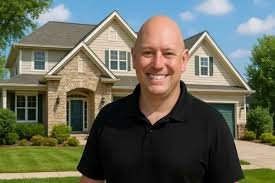
You’ve found the perfect house in Short Pump. Your offer is ready. Then the lender asks: “Which loan program do you want?” And suddenly, you’re staring at a list of acronyms—FHA, VA, conventional, USDA—with no idea which one actually saves you money or gets your offer accepted faster in Virginia’s competitive market.
Here’s what most Virginia homebuyers don’t realize: The loan program you choose matters more than the interest rate. Choose wrong, and you might pay thousands extra in mortgage insurance, get outbid by buyers with stronger financing, or worse—get denied after wasting weeks in underwriting.
The challenge? Big-box lenders like Rocket Mortgage and Veterans United push whatever programs make them the most profit. Local lenders like Atlantic Bay Mortgage and Southern Trust Mortgage can only offer their own limited product shelf. Meanwhile, you’re left guessing which option actually fits your financial situation.
This isn’t about finding “the best loan program”—because that doesn’t exist. It’s about finding the right program for YOUR credit profile, down payment, and homebuying goals in Virginia’s diverse markets from Richmond to Virginia Beach to Charlottesville.
This guide walks you through the exact process to identify which loan program matches your situation—without the credit score damage that comes from shopping multiple lenders. Unlike retail lenders who funnel everyone into the same few products, we’ll show you how accessing hundreds of lenders through a broker model reveals options most Virginia buyers never see.
Step 1: Assess Your Financial Profile Without Damaging Your Credit
Before you can choose the right loan program, you need to know where you actually stand financially. Most Virginia homebuyers make a critical mistake here: They apply with Rocket Mortgage, then Freedom Mortgage, then PrimeLending—racking up multiple hard credit inquiries that drop their score by 10-20 points before they’ve even started house hunting.
Here’s the smarter approach: Get a Free NoTouch Credit PreQual first. This means a mortgage professional reviews your credit profile without performing a hard pull that impacts your score. You’ll see exactly what lenders see—your credit score, existing debts, payment history—but your credit report shows zero new inquiries.
Why does this matter? Because if your score is 680 versus 700, you might qualify for conventional financing at one number but need FHA at the other. If you’re at 620 versus 640, certain loan programs become available or disappear entirely. You need this information before you start shopping, not after you’ve already damaged your score.
While you’re gathering credit information, collect your financial documentation: Recent pay stubs showing your current income, last two years of W-2s or tax returns if you’re self-employed, and bank statements showing your available down payment and reserves. Don’t guess at these numbers—lenders in Virginia markets like Henrico and Chesterfield will verify every dollar.
Calculate your current debt-to-income ratio by adding up all monthly debt payments (car loans, student loans, credit cards, existing mortgages) and dividing by your gross monthly income. This percentage determines which loan programs you’ll qualify for. Most conventional loans cap at 45-50% DTI, while FHA can stretch higher in certain situations.
Success indicator: You have your credit score, total monthly debts, gross monthly income, and available down payment written down—and your credit report shows zero new inquiries from mortgage shopping. This clean financial snapshot becomes your roadmap for the next steps.
Step 2: Identify Your Homebuying Goals and Virginia Market Considerations
A first-time buyer competing for a townhouse in Glen Allen needs a completely different loan strategy than someone refinancing a single-family home in Fredericksburg or buying an investment property in Hampton Roads. Your homebuying goals determine which loan programs even make sense to consider.
Start with your down payment reality. If you have 20% or more saved, conventional financing typically offers the best rates and lowest overall costs. But if you’re like most Virginia first-time buyers in markets like Midlothian or Ashland, you might have 3-5% saved—which opens up different program options entirely.
Consider your timeline and competition level. In hot markets like Short Pump and Richmond’s West End, sellers often receive multiple offers within days. They favor buyers with financing that closes quickly and has fewer potential obstacles. A conventional loan with 20% down typically beats an FHA offer in competitive situations, even if the FHA offer is slightly higher in price.
Virginia’s diverse property markets create different loan limit considerations. In areas like Charlottesville and Albemarle County, median home prices might push against conventional loan limits. In Hampton Roads markets like Chesapeake and Virginia Beach, you’ll find a wider price range. In rural areas like Louisa or Caroline County, some properties might qualify for specialized programs that urban properties don’t.
Think about your long-term plans. If you’re buying a forever home in Hanover County, paying slightly higher upfront costs for a conventional loan that eliminates mortgage insurance makes sense. If you’re planning to relocate in 3-5 years, minimizing your down payment and accepting mortgage insurance might be the smarter financial move.
Your employment situation matters too. W-2 employees with stable income have the easiest path to conventional financing. Self-employed buyers or those with commission-based income might find FHA programs more flexible with income documentation. Recent job changes, gaps in employment, or non-traditional income sources all influence which programs will actually approve you.
Success indicator: You’ve written down your down payment amount, desired purchase price range, timeline for buying, and whether you prioritize lowest monthly payment, fastest closing, or strongest offer competitiveness. These factors will eliminate certain loan programs immediately.
Step 3: Compare Conventional, FHA, and VA Loan Requirements Side-by-Side
Now that you know your financial profile and homebuying goals, let’s match them to actual loan programs. Most Virginia buyers will choose between conventional, FHA, or VA financing—and each has distinct advantages depending on your situation.
Conventional Loans: These are the gold standard when you have strong credit and significant down payment. You’ll typically need a 620 credit score minimum, though 680+ gets you better rates. Down payment can be as low as 3% for first-time buyers, but putting down less than 20% means paying private mortgage insurance (PMI) until you reach 20% equity.
Conventional loans work best when you have 5-20% down payment saved, credit scores above 700, and stable W-2 income. In competitive Virginia markets like Henrico and Chesterfield, conventional financing makes your offer stronger because sellers know these loans close reliably. The debt-to-income limits are slightly stricter than FHA, but the overall costs are typically lower if you qualify.
FHA Loans: These government-backed loans accept credit scores as low as 580 with 3.5% down, or 500-579 with 10% down. The debt-to-income ratios can stretch higher than conventional, making them ideal for buyers with strong income but limited savings or moderate credit challenges.
The tradeoff? FHA loans require both upfront mortgage insurance (1.75% of the loan amount) and monthly mortgage insurance that lasts the life of the loan if you put down less than 10%. For a $300,000 home in Midlothian, that’s $5,250 added to your loan amount upfront, plus roughly $200-250 monthly in mortgage insurance.
FHA makes sense when you have limited down payment funds, credit scores in the 580-680 range, or slightly higher debt ratios that conventional lenders won’t accept. Many first-time buyers in areas like Spotsylvania and Stafford use FHA to get into homeownership sooner rather than waiting years to save 20% down.
VA Loans: If you’re a veteran, active-duty service member, or qualifying surviving spouse, VA loans offer zero down payment, no mortgage insurance, and competitive rates. Veterans United markets heavily in Virginia, but here’s what they don’t advertise: As a retail lender, they can only offer their own VA products.
Working with a mortgage broker who accesses hundreds of lenders means comparing VA rates and terms from multiple wholesale lenders simultaneously. You might find better rates, lower fees, or more flexible underwriting than going directly to Veterans United or Movement Mortgage’s VA division.
VA loans require a funding fee (typically 2.3% for first-time use with zero down), but this can be rolled into the loan amount. For Virginia veterans buying in markets like Williamsburg, Yorktown, or Hampton Roads, VA financing often beats conventional even if you have 20% down payment available—because eliminating mortgage insurance saves significant money long-term.
Success indicator: Based on your credit score, down payment, and debt-to-income ratio from Step 1, you’ve identified which 1-2 loan programs you actually qualify for. If you’re a veteran with a 720 score and 10% down, you’re choosing between VA and conventional. If you’re a first-time buyer with a 640 score and 3.5% down, FHA is likely your path.
Step 4: Evaluate Lender Options—Big Banks vs. Brokers vs. Local Virginia Lenders
Choosing your loan program is only half the equation. Where you get that loan determines the rate, fees, and service quality you’ll experience. This is where most Virginia homebuyers leave thousands of dollars on the table by not understanding how different lender types operate.
Retail Lenders (Rocket Mortgage, Movement Mortgage, Guild Mortgage): These companies originate loans using their own money and sell their own products. When you apply with Rocket Mortgage, you get Rocket’s rates, Rocket’s fees, and Rocket’s underwriting standards. Period. They can’t shop your scenario to other lenders or access wholesale pricing.
The advantage? Brand recognition and streamlined online platforms. The disadvantage? You’re seeing one lender’s pricing and one set of program options. If Rocket’s conventional rates are higher this week, or their FHA underwriting is stricter than competitors, you’ll never know because you can’t comparison shop without applying elsewhere and taking another credit hit.
Local Virginia Lenders (Atlantic Bay Mortgage, Embrace Home Loans, CrossCountry Mortgage): These regional players offer more personalized service and local market knowledge than national online lenders. They understand Virginia property values, local appraisal timelines, and have relationships with area real estate agents.
However, they still operate as retail lenders with their own product shelf. Atlantic Bay can only offer Atlantic Bay’s programs. Embrace Home Loans can’t access Guild Mortgage’s rates. You’re getting better service than Rocket Mortgage’s call center, but still limited to one lender’s pricing and programs.
Mortgage Brokers (Powerhouse Mortgages): Here’s where the model changes entirely. Brokers don’t lend their own money—they access hundreds of wholesale lenders simultaneously. When you work with a broker, your scenario gets shopped to multiple lenders at once, finding the best combination of rate, fees, and program fit for your specific situation.
Think of it like this: Rocket Mortgage is like shopping at one car dealership. They’ll sell you a Ford because that’s what they have. A mortgage broker is like having a car-buying service that checks every dealership in Virginia and brings you the best deal on the exact car you want—whether that’s a Ford, Toyota, or Honda.
For a Virginia buyer in Roanoke or Lynchburg, this means your broker might find a conventional loan from Lender A with the best rate, but Lender B has lower closing costs, while Lender C has the most flexible underwriting for your self-employment income. The broker presents all options and helps you choose based on what matters most to you.
The Free NoTouch Credit PreQual advantage becomes critical here. When you work with a broker offering this service, you get your financial profile analyzed against hundreds of lenders’ programs without any credit impact. Compare this to applying with PrimeLending, then Fairway Independent Mortgage, then CapCenter—each application triggers a hard pull, and you’re still only seeing three lenders’ options.
Questions to ask any lender: What’s your rate lock policy—can you lock before finding a house or only after contract? How are closing costs broken down—can you see lender fees versus third-party fees separately? Where is the loan processed—locally in Virginia or in a national processing center? What’s your average timeline from application to clear-to-close?
Ask specifically about their lender network if they claim to offer multiple options. Some lenders like NFM Lending or C&F Mortgage Corporation advertise “many programs” but actually have limited correspondent relationships compared to true broker access to hundreds of wholesale lenders.
Success indicator: You understand whether you’re working with a lender who can only offer their own products versus a broker who can shop your scenario to multiple lenders. You’ve asked about credit pull policies, rate lock terms, and local processing capabilities. You know exactly what you’re comparing when you receive rate quotes.
Step 5: Get Pre-Approved and Lock in Your Best Program
You’ve identified your ideal loan program and chosen your lender type. Now it’s time to move from exploration to commitment with a full pre-approval that makes you a serious buyer in Virginia’s competitive markets.
Understand the difference between pre-qualification and pre-approval. A pre-qual is an estimate based on information you provide—it carries minimal weight with Virginia sellers in markets like Richmond or Virginia Beach. A pre-approval means a lender has verified your income, assets, and credit, and has conditionally approved you for a specific loan amount and program.
When you submit your full application, the lender will perform a hard credit pull (this is unavoidable for actual approval, but remember—you already knew your score from the NoTouch PreQual, so there are no surprises). They’ll verify your employment, review your bank statements, and run your scenario through automated underwriting systems.
Here’s where Mortgage Broker of the Year expertise makes a tangible difference: An experienced broker knows which lenders have the fastest turnaround times for Virginia properties, which underwriters are more flexible with specific credit situations, and how to structure your application to get the strongest approval possible.
If you’re shopping rates across multiple lenders, do it within a 14-day window. Credit scoring models treat multiple mortgage inquiries within this period as a single event, minimizing the impact on your score. This is when you compare the final terms from different lenders—actual rates, actual fees, actual monthly payments—not marketing estimates.
Pay attention to the rate lock terms. Some lenders offer 30-day locks, others go 45-60 days. In fast-moving Virginia markets like Glen Allen or Chesterfield, a shorter lock might be fine. If you’re building new construction in Goochland or Louisa, you’ll need a longer lock period. Understand what happens if rates drop after you lock—some lenders offer float-down options, others don’t.
Review your pre-approval letter carefully before you start house hunting. It should specify: Your approved loan amount, the loan program (conventional, FHA, VA), your down payment percentage, and the expiration date. Real estate agents in competitive Virginia markets will ask to see this letter before showing properties—a vague pre-qual from an online lender won’t cut it.
Verify the final terms match what you were quoted. Your interest rate, monthly payment estimate, closing costs, and required down payment should all align with the initial scenario you discussed. If something changed dramatically, ask why. Market rate fluctuations happen, but significant differences might indicate the lender made errors in the initial quote.
Success indicator: You have a detailed pre-approval letter in hand, specifying your loan program, approved amount, and down payment. You understand your rate lock options, closing cost breakdown, and monthly payment estimate. You’re ready to make competitive offers on Virginia properties knowing exactly what financing you bring to the table.
Your Roadmap to the Right Loan Program
Choosing the right loan program isn’t about finding the lowest advertised rate on Rocket Mortgage’s website or going with whichever lender your neighbor used. It’s about matching your specific financial profile to the program that saves you the most money while getting your offer accepted in Virginia’s competitive markets.
Here’s your quick-reference checklist for finding your perfect loan program:
Financial Profile: Get your credit score, debt-to-income ratio, and down payment amount documented without damaging your credit through hard pulls. Use Free NoTouch Credit PreQuals to see where you stand before formal applications.
Homebuying Goals: Define whether you’re prioritizing lowest monthly payment, fastest closing, strongest offer competitiveness, or long-term cost savings. Your timeline and property type in Virginia markets from Richmond to Hampton Roads to Charlottesville will guide which programs make sense.
Program Comparison: Match your credit score and down payment to conventional, FHA, or VA requirements. Understand the tradeoffs—conventional offers lower long-term costs with higher credit requirements; FHA provides easier qualification with higher insurance costs; VA delivers zero-down financing for qualified veterans.
Lender Selection: Recognize that retail lenders like Movement Mortgage or Guild Mortgage can only offer their own products, while mortgage brokers access hundreds of wholesale lenders to find your best terms. Ask about credit pull policies, rate locks, and local Virginia processing capabilities.
Pre-Approval: Move beyond pre-qualification to full approval with verified income, assets, and credit. Get specific terms in writing—loan program, rate, fees, down payment—before you start house hunting in competitive Virginia markets.
The difference between choosing the right loan program and settling for whatever a retail lender pushes can mean thousands of dollars over your mortgage’s lifetime. It can mean the difference between your offer getting accepted or losing out to a buyer with stronger financing in markets like Short Pump, Henrico, or Fredericksburg.
Most Virginia homebuyers never realize they had options beyond what Rocket Mortgage or Veterans United advertised. They don’t know that accessing hundreds of lenders through a broker model reveals programs, rates, and terms that retail lenders simply can’t match. They don’t understand that shopping multiple lenders the traditional way damages their credit before they’ve even started looking at houses.
You now have the step-by-step process to identify exactly which loan program fits your situation—and the knowledge to choose a lender who can actually deliver it at the best possible terms. Whether you’re buying your first home in Midlothian, refinancing in Virginia Beach, or investing in property near Lake Anna, the right loan program is the one that matches your financial reality and homebuying goals.
Ready to find out which loan program is right for your specific Virginia homebuying situation? Learn more about our services and discover how Free NoTouch Credit PreQuals and access to hundreds of lenders can save you thousands while getting you into the right home with the right financing.

