

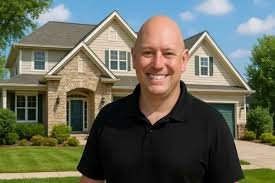
Virginia homebuyers face a persistent gap: the properties within reach often need significant work, while the move-in-ready homes they want are priced out of reach. Renovation mortgage loan types solve this directly by rolling the purchase price and improvement costs into a single loan — one closing, one monthly payment, one rate.
Whether you’re eyeing a dated colonial in Midlothian, a fixer-upper near Lake Anna, or a tired ranch in Stafford, choosing the wrong renovation program can cost you in rate, mortgage insurance, or renovation scope limits. Choosing the right one, sourced through a broker with access to hundreds of investors, can make a Virginia fixer-upper the smartest acquisition you’ve ever made.
This article breaks down the six most relevant renovation mortgage loan types available to Virginia borrowers in 2026. You’ll find a 3-scenario rate payment table, a real discount points breakeven example, and a broker-vs.-single-lender comparison so you can see exactly what you’re working with before you commit.
And before any of that: you can start with a no-touch credit pull — our NoTouch Credit PreQual checks your eligibility without a hard inquiry hitting your credit file. No credit hit, no commitment, no guesswork. Let’s get specific.
By Duane Buziak, NMLS #1110647 | Powerhouse Mortgages | Coast2Coast Mortgage LLC, NMLS #376205
1. FHA 203(k) Standard — Major Structural Rehab
The Challenge It Solves
Many Virginia properties in the $250,000–$350,000 range have genuine structural needs: aging roofs, failing foundations, outdated electrical panels, or HVAC systems that haven’t been replaced in decades. A conventional purchase loan won’t touch these properties in their current condition, and a standard FHA loan won’t either. The FHA 203(k) Standard exists precisely for this situation.
The Strategy Explained
The FHA 203(k) Standard program allows borrowers to finance both the purchase price and renovation costs — exceeding $35,000 — into a single FHA-insured loan. Structural work is permitted: foundation repair, roof replacement, full system overhauls, additions, and major remodels all qualify. The program requires a HUD-approved 203(k) consultant who inspects the property, validates the scope of work, and manages a draw schedule so contractors are paid in stages as work is completed.
Minimum down payment is 3.5% at a 580+ FICO score, consistent with standard FHA guidelines. The loan is sized against the “as-completed” appraised value — meaning the lender is lending against what the property will be worth after renovation, not what it’s worth today. That distinction matters enormously for properties with significant upside.
One important note: FHA loans carry both an upfront mortgage insurance premium (UFMIP) and an annual MIP for the life of the loan if your down payment is under 10%. That’s a real cost to factor into your comparison against conventional renovation products.
Implementation Steps
1. Get your no hard inquiry mortgage pre-approval through our NoTouch Credit PreQual to confirm FHA eligibility before you make an offer.
2. Identify a HUD-approved 203(k) consultant in Virginia — your broker can provide referrals. The consultant’s inspection report drives the loan amount and scope approval.
3. Obtain contractor bids for all planned work. Bids must be detailed and itemized; lump-sum estimates are typically not accepted.
4. Submit the full package — purchase contract, consultant report, and contractor bids — to underwriting. Renovation funds are held in escrow and disbursed per the draw schedule.
Pro Tips
The 203(k) Standard has a longer closing timeline than conventional loans — often 45–60 days. Build that into your offer timeline. Also, confirm your contractor is comfortable with the draw-schedule payment structure; some contractors prefer lump-sum payment and won’t work with escrow disbursements. Lining up a renovation-experienced contractor early prevents significant delays.
2. FHA 203(k) Limited — Cosmetic Upgrades Under $35,000
The Challenge It Solves
Not every Virginia fixer-upper needs structural work. Many starter homes in markets like Fredericksburg, Culpeper, and the Shenandoah Valley need updated kitchens, new flooring, fresh bathrooms, or window replacements — cosmetic improvements that dramatically increase livability and value without touching the bones of the structure. The FHA 203(k) Standard is overkill for these projects. The Limited version is built for exactly this scenario.
The Strategy Explained
The FHA 203(k) Limited caps renovation costs at $35,000 and prohibits structural work. In exchange, it removes the HUD consultant requirement, which simplifies the process and compresses the closing timeline. The same 3.5% down / 580+ FICO eligibility applies. Permitted improvements include kitchen and bathroom remodels, flooring, roofing (non-structural), HVAC replacement, plumbing and electrical updates, and accessibility modifications.
The streamlined process makes this one of the more accessible renovation loan types for first-time Virginia homebuyers who want to personalize a property without taking on a full structural rehab. The tradeoff: if your renovation scope creeps past $35,000, you’ll need to pivot to the Standard version — which means a consultant, a longer timeline, and more documentation.
Lifetime MIP still applies under 10% down, which is the same caveat as the Standard 203(k). Borrowers planning to stay in the property long-term should model the total MIP cost against a conventional alternative like the HomeStyle loan.
Implementation Steps
1. Confirm renovation scope stays under $35,000 with a detailed contractor bid before submitting your loan application.
2. Verify the planned work is non-structural — no load-bearing wall removal, no foundation work, no room additions.
3. Submit contractor bids with your loan package. Two bids are typically required by the lender for cost validation.
Pro Tips
The Limited 203(k) often closes faster than the Standard version precisely because there’s no consultant requirement. If your project is genuinely under $35,000 and non-structural, this program can close on a timeline comparable to a standard FHA purchase. Build a 10–15% contingency buffer into your renovation budget — cost overruns that push past $35,000 mid-process create real complications.
3. Fannie Mae HomeStyle Renovation — Conventional With No Lifetime MIP
The Challenge It Solves
FHA products carry lifetime mortgage insurance for most borrowers. For a Virginia homebuyer putting 5% down on a $350,000 renovation loan, that annual MIP adds up to a meaningful cost over time — and it doesn’t go away when your equity crosses 20%. Conventional borrowers who want broader renovation scope and cancellable PMI need a different tool.
The Strategy Explained
The Fannie Mae HomeStyle Renovation loan is a conventional product that covers a wider renovation scope than either 203(k) version. Luxury upgrades, accessory dwelling units (ADUs), landscaping, pools, and high-end finishes all qualify — categories that FHA explicitly excludes. The minimum FICO is 620, and the loan is sized against the as-completed appraised value.
PMI is cancellable once you reach 20% equity, which is a significant long-term cost advantage over FHA. For refinances, Fannie Mae guidelines allow up to 75% LTV on the as-completed value. There’s no lifetime mortgage insurance requirement — once you hit the equity threshold, you request cancellation and the cost disappears.
The HomeStyle is particularly relevant for Virginia borrowers purchasing in established neighborhoods where renovation quality directly drives resale value. An ADU addition in Northern Virginia, for example, can generate rental income that offsets mortgage costs — and HomeStyle is one of the few renovation loan types that finances that scope.
Implementation Steps
1. Confirm your FICO is at or above 620 through a soft pull mortgage broker pre-qualification before selecting this program.
2. Work with a licensed contractor to develop a detailed scope of work and cost estimate — HomeStyle requires contractor approval as part of the underwriting process.
3. Order the as-completed appraisal with your full renovation plan attached. The appraiser values the property based on the finished scope.
4. Renovation funds are held in escrow and disbursed as work is completed and inspected.
Pro Tips
HomeStyle allows the borrower to act as their own general contractor in some cases — a significant cost-saving opportunity for Virginia borrowers with construction backgrounds. Confirm with your broker whether this option is available under your specific investor’s overlay. Also, model the PMI cancellation timeline upfront: in Virginia markets where values are appreciating, you may hit 20% equity faster than the amortization schedule alone suggests.
4. VA Renovation Loan — The Underused Military Benefit
The Challenge It Solves
Virginia is home to some of the largest military installations in the country: Naval Station Norfolk, Marine Corps Base Quantico in Prince William County, Fort Belvoir near Stafford, and Langley AFB in the Newport News area. Thousands of active-duty service members, veterans, and surviving spouses in these corridors have VA loan entitlement they’ve never used for a renovation purchase — often because they don’t know the program exists in this form.
The Strategy Explained
The VA renovation loan combines VA purchase or refinance financing with renovation costs, preserving the core VA benefits: zero down payment, no private mortgage insurance, and competitive rates. The property must meet VA Minimum Property Requirements (MPRs) after renovation is complete — meaning the renovation scope must bring the property up to VA habitability standards, not just cosmetic preference.
At Powerhouse Mortgages, Coast2Coast Mortgage LLC programs allow VA renovation financing down to a 500 FICO score — a lender-specific overlay that significantly expands eligibility for borrowers with credit challenges. That’s a meaningful distinction from standard VA guidelines and worth confirming directly with Duane for your specific scenario.
For Virginia military borrowers, the combination of zero down and rolled-in renovation costs is particularly powerful in markets like Stafford, Woodbridge, and Hampton Roads, where older housing stock is common and move-in-ready inventory is limited. A VA renovation loan can turn a property that fails VA MPRs into a qualifying purchase — without requiring a separate renovation loan at a higher rate.
Implementation Steps
1. Obtain your Certificate of Eligibility (COE) through VA.gov or allow your broker to pull it on your behalf.
2. Identify properties that need work but are within reach of VA MPR compliance post-renovation. Your broker can help you assess whether a property’s deficiencies are VA-approvable renovation items.
3. Secure a VA-approved appraiser who will value the property on an as-completed basis against the renovation plan.
4. Renovation funds are escrowed and released upon completion inspection — similar to other renovation loan structures.
Pro Tips
The VA renovation loan is genuinely underused in Virginia military markets. Many real estate agents and even some loan officers aren’t familiar with the program, which means less competition on fixer-upper offers from VA-eligible buyers. That’s a strategic advantage worth leveraging. A no credit hit mortgage application through our NoTouch PreQual lets you confirm VA eligibility before you start making offers.
5. USDA Renovation Loan — Rural Virginia Fixer-Uppers
The Challenge It Solves
Rural Virginia has significant housing inventory that needs work — and buyers in areas like Louisa County, Spotsylvania County, and parts of the Roanoke region often have limited down payment resources. The USDA renovation loan addresses both constraints simultaneously: zero down payment and rolled-in renovation costs for eligible rural properties.
The Strategy Explained
The USDA Section 502 program allows renovation costs to be incorporated into the purchase loan for properties in USDA-eligible rural zones. Zero down payment is a published program feature. Renovation scope under the USDA program is focused on livability and safety improvements — structural repairs, roofing, plumbing, electrical, and heating systems — rather than luxury upgrades or cosmetic preferences.
Income limits apply and vary by county in Virginia. Before assuming USDA eligibility, verify both the property location against the USDA eligibility map and your household income against the current county-specific limits. Both must qualify simultaneously.
For Virginia borrowers targeting Louisa, Spotsylvania, or rural Roanoke-area properties, the USDA renovation loan can be a genuinely powerful tool — particularly when the alternative is either a high-down-payment conventional loan or an FHA product with lifetime MIP. The zero-down structure preserves cash for renovation contingencies and moving costs.
Implementation Steps
1. Verify property eligibility using the USDA eligibility map before falling in love with a specific address.
2. Confirm household income is within the USDA limit for your Virginia county — limits are updated periodically and vary significantly across the state.
3. Scope your renovation to livability and safety improvements. Luxury finishes and cosmetic-only upgrades typically fall outside USDA renovation guidelines.
4. Work with a USDA-approved lender (your broker can confirm program availability) and allow for the USDA guarantee process, which adds time to the closing timeline compared to conventional loans.
Pro Tips
USDA loans typically have a longer processing timeline than FHA or conventional products due to the USDA guarantee process. In competitive rural Virginia markets, communicate this timeline to your real estate agent upfront so your offer reflects realistic closing expectations. Also, USDA-eligible areas can change — always verify current eligibility on the USDA map rather than relying on prior knowledge of a neighborhood’s status.
6. Cash-Out Refinance for Renovation — Leveraging Existing Equity
The Challenge It Solves
Not every renovation scenario involves a purchase. Many Virginia homeowners have built meaningful equity over the past several years and want to use it to fund improvements — kitchen overhauls, additions, basement finishes, or energy upgrades — without taking on a separate home equity loan or line of credit at a higher rate. A cash-out refinance consolidates the existing mortgage and the renovation funding into one new loan at one rate.
The Strategy Explained
A cash-out refinance replaces your existing mortgage with a new, larger loan and delivers the difference in cash at closing. At Powerhouse Mortgages, cash-out refinances are available up to 90% LTV — meaning a Virginia homeowner with a property valued at $400,000 could access up to $360,000 in total loan value, paying off their existing balance and taking the remainder as renovation funds.
The rate you secure on the new loan determines both your monthly payment and your total interest cost over the life of the loan. This is where the 3-scenario rate table becomes a concrete planning tool rather than an abstract exercise.
3-Scenario Rate Payment Table — $350,000 Loan, 30-Year Fixed
The following figures are illustrative planning scenarios based on standard amortization math. Actual rates vary by credit profile, loan type, LTV, and market conditions at time of application.
Scenario A — 6.50%: Monthly P&I = $2,213 | Total interest over 30 years = $446,680
Scenario B — 6.75%: Monthly P&I = $2,270 | Total interest over 30 years = $467,200
Scenario C — 7.00%: Monthly P&I = $2,328 | Total interest over 30 years = $488,080
The difference between Scenario A and Scenario C is $115 per month and over $41,000 in total interest over 30 years. That’s not a rounding error — it’s a real cost that a rate conversation with your broker can directly influence.
Discount Points Breakeven Example
Here’s a real worked example using the scenarios above. Suppose you’re quoted 7.00% and considering buying down to 6.75% by purchasing one discount point.
Loan amount: $350,000
Cost of 1 discount point: 1% of loan amount = $3,500 paid at closing
Rate reduction: 7.00% → 6.75%
Monthly payment difference: $2,328 − $2,270 = $58/month in savings
Breakeven calculation: $3,500 ÷ $58 = approximately 60 months (5 years)
Interpretation: If you remain in the home or keep this loan beyond 5 years, the point purchase pays for itself and generates ongoing savings. If you sell or refinance before 5 years, you don’t recoup the upfront cost. For Virginia homeowners doing a renovation cash-out with plans to stay long-term, the math often favors buying down the rate.
Broker vs. Single-Lender Rate Access
One of the most consequential decisions in a cash-out refinance isn’t the rate itself — it’s where you shop for it. A single lender offers one shelf of products at that institution’s current pricing. A mortgage broker shops hundreds of investors simultaneously, finding the best available rate for your specific credit profile, LTV, and loan type.
Single lender: One institution’s pricing | Limited product shelf | No cross-investor comparison
Mortgage broker (Powerhouse): Hundreds of investors shopped simultaneously | Full product access across loan types | Rate competition working in your favor
On a $350,000 cash-out refinance, even a 0.25% rate improvement — the difference between Scenario B and Scenario A in the table above — is worth $57/month and over $20,000 in total interest. That’s the concrete value of broker access.
Implementation Steps
1. Establish your current home value with a broker-ordered desktop appraisal or AVM estimate before formally applying.
2. Calculate your current loan balance and determine how much cash you need for your renovation scope — stay within the 90% LTV maximum.
3. Use the rate table above to model monthly payment impact at different rate scenarios before committing to a rate lock.
4. Run the discount points breakeven math against your expected timeline in the home to determine whether buying down the rate makes financial sense.
Pro Tips
A mortgage pre-approval without hard pull through our NoTouch Credit PreQual lets you see where your rate is likely to land before you formally apply — giving you real numbers for the breakeven calculation without touching your credit score. For cash-out refinances specifically, your LTV and credit score are the two biggest rate drivers. Knowing both upfront puts you in a stronger negotiating position.
Renovation Loan Comparison: All Six Programs at a Glance
Use this table to compare the six renovation mortgage loan types side by side before selecting your program.
FHA 203(k) Standard: Min. Down = 3.5% | Min. FICO = 580 | Structural Work = Yes | MIP/PMI = Lifetime MIP | Renovation Cap = None | Best For = Major rehab, structural repairs
FHA 203(k) Limited: Min. Down = 3.5% | Min. FICO = 580 | Structural Work = No | MIP/PMI = Lifetime MIP | Renovation Cap = $35,000 | Best For = Cosmetic upgrades, starter homes
HomeStyle Renovation: Min. Down = 3% | Min. FICO = 620 | Structural Work = Yes | MIP/PMI = Cancellable PMI | Renovation Cap = None | Best For = Luxury, ADUs, conventional borrowers
VA Renovation: Min. Down = 0% | Min. FICO = 500 (Coast2Coast overlay) | Structural Work = Yes | MIP/PMI = None | Renovation Cap = MPR-compliant | Best For = Military borrowers in Virginia corridors
USDA Renovation: Min. Down = 0% | Min. FICO = Varies | Structural Work = Limited | MIP/PMI = Guarantee fee | Renovation Cap = Livability/safety | Best For = Rural Virginia buyers with income limits
Cash-Out Refinance: Min. Down = N/A (equity-based) | Min. FICO = Varies | Structural Work = Yes | MIP/PMI = Depends on LTV | Renovation Cap = Up to 90% LTV | Best For = Existing Virginia homeowners with equity
Frequently Asked Questions About Renovation Mortgage Loan Types
What is the difference between FHA 203(k) Standard and Limited?
The Standard version handles projects over $35,000 and permits structural work, but requires a HUD-approved consultant and a draw schedule. The Limited version is capped at $35,000, prohibits structural work, and requires no consultant — making it faster and simpler. Both carry the same 3.5% down and 580+ FICO eligibility. Per HUD’s official 203(k) program page, the consultant requirement is the primary operational distinction between the two.
Can I use a VA loan for a fixer-upper in Virginia?
Yes. The VA renovation loan combines purchase or refinance financing with renovation costs, preserving zero down payment and no PMI. The property must meet VA Minimum Property Requirements after renovation is complete. Through Coast2Coast Mortgage LLC, this program is available down to a 500 FICO score — confirm current availability with Duane Buziak, NMLS #1110647.
What credit score do I need for a renovation mortgage?
It depends on the program. FHA 203(k) Standard and Limited require a 580+ FICO for 3.5% down. Fannie Mae HomeStyle requires 620+. VA renovation through Coast2Coast is available to 500 FICO as a lender-specific overlay. USDA minimums vary by lender. The best way to know exactly where you stand is a soft credit pull mortgage pre-qualification through our NoTouch PreQual — no hard inquiry, no credit impact.
How does a renovation loan appraisal work?
Renovation loan appraisals are based on the “as-completed” value — what the property will be worth after the planned renovations are finished, not its current condition. You submit a detailed renovation plan and contractor bids alongside the appraisal order. The appraiser then values the property as if the work has been completed. This is how renovation loans can finance improvements that exceed the property’s current market value.
Can I do a cash-out refinance for home improvements in Virginia?
Yes. A cash-out refinance replaces your existing mortgage with a larger loan and delivers the equity difference in cash at closing, which you can use for any improvement purpose. At Powerhouse Mortgages, cash-out refinances are available up to 90% LTV. The rate you lock determines your monthly payment and total interest cost — use the 3-scenario table in Strategy 6 to model your specific numbers.
What renovations are allowed under USDA loans?
USDA renovation financing under the Section 502 program is focused on livability and safety: structural repairs, roofing, plumbing, electrical, and heating systems. Luxury upgrades, cosmetic-only improvements, and amenity additions typically fall outside the program’s scope. Both the property and the borrower’s household income must meet USDA eligibility requirements — verify current property eligibility at the USDA eligibility map.
Is a HomeStyle loan better than a 203(k) for conventional borrowers?
For borrowers who qualify conventionally (620+ FICO, stable income, reasonable LTV), the HomeStyle loan is often the stronger choice. It covers broader renovation scope including luxury items and ADUs, carries cancellable PMI rather than lifetime MIP, and doesn’t require a HUD consultant. The 203(k) remains the better tool when FICO is below 620 or when the down payment is limited to 3.5% and conventional qualification isn’t achievable. The right answer depends on your specific credit and financial profile.
How long does a renovation mortgage take to close?
Timelines vary by program. The FHA 203(k) Limited typically closes in 30–45 days when documentation is complete. The Standard 203(k) often runs 45–60 days due to the consultant requirement and draw schedule setup. HomeStyle renovation loans typically close in 30–45 days. VA and USDA renovation loans may take longer due to their respective guarantee processes. Cash-out refinances for renovation generally follow standard refinance timelines of 21–30 days when the file is clean. Building realistic timeline expectations into your offer or project plan prevents costly delays.
Putting It All Together: Your Renovation Loan Decision Framework
Renovation mortgage loan types aren’t interchangeable. The wrong program costs you in rate, mortgage insurance structure, or renovation scope limits. The right program, sourced through a broker with access to hundreds of investors rather than one institution’s product shelf, can make a Virginia fixer-upper the smartest purchase or refinance you’ve ever executed.
Here’s a simple decision framework based on what we’ve covered:
If you’re a military borrower in Virginia: Start with the VA renovation loan. Zero down, no PMI, and 500 FICO access through Coast2Coast make it the strongest tool in most scenarios.
If you’re buying in rural Virginia with limited down payment: Verify USDA eligibility first. Zero down with rolled-in renovation costs is a powerful combination when income and property eligibility align.
If your project is cosmetic and under $35,000: The FHA 203(k) Limited offers a faster, simpler path than the Standard version.
If your project exceeds $35,000 or involves structural work: Choose between FHA 203(k) Standard (3.5% down, 580 FICO) and HomeStyle (3% down, 620 FICO, cancellable PMI) based on your credit profile and long-term MIP cost calculation.
If you’re an existing Virginia homeowner with equity: Model the cash-out refinance against your current rate and renovation budget. Use the 3-scenario rate table and the discount points breakeven math to make the rate decision with real numbers.
Start with a no hard inquiry mortgage pre-approval so you know exactly which programs you qualify for before you make an offer or commit to a scope. From there, the rate table, the points math, and the loan type comparison become concrete decisions — not guesswork.
Get your free NoTouch Credit PreQual today and find out exactly which renovation mortgage loan types you qualify for — without a single point of impact to your credit score. Then experience why Virginia homebuyers choose Powerhouse for faster close times and access to hundreds of lenders working for you simultaneously.