


Virginia homebuyers ask this question constantly: do I need prequalification or preapproval, and does it even matter? The short answer is yes, it matters a lot, especially in competitive markets like Northern Virginia, Richmond, and the Hampton Roads corridor where sellers routinely receive multiple offers within days.
Prequalification gives you a ballpark budget. Preapproval gives you buying power. But knowing the difference is only step one. The real edge comes from using the right tools and process to get there faster, without damaging your credit score along the way.
This guide walks through the top tools and steps Virginia buyers can use to go from “just curious” to “offer-ready” with confidence. We include a 3-scenario rate payment table, a discount points breakeven example, and an 8-question FAQ so you leave with zero guesswork.
By Duane Buziak, NMLS #1110647 | Coast2Coast Mortgage LLC, NMLS #376205
Prequalification vs. Preapproval: The Core Distinction
Before diving into the tools, let’s anchor the key difference so every section that follows makes sense.
Prequalification is typically based on self-reported income and assets, uses a soft pull or no credit pull at all, and produces an estimate. It is useful for early budgeting but is not verified. Many sellers in Virginia’s competitive markets will not accept an offer backed only by a prequalification letter.
Preapproval involves verified income, assets, and credit. In most cases it requires a hard inquiry. It produces a conditional commitment letter that sellers and their agents take seriously. In markets like Fairfax, Arlington, and Prince William counties, preapproval is effectively a prerequisite before a seller will entertain your offer.
The good news: one tool in this list lets you start the process with a soft credit pull mortgage approach, so you can get a real read on your buying power before any hard inquiry hits your file.
1. Powerhouse Mortgages — NoTouch Credit PreQual and Same-Day Preapproval
Best for: Virginia buyers who want real buying power without a credit score hit to get started.
Powerhouse Mortgages is a Virginia-focused mortgage broker offering a free NoTouch Credit PreQual using Vantage Score 4.0 via soft pull, plus same-day preapproval for qualified buyers, with access to hundreds of lenders through a single submission.

Where This Tool Shines
The NoTouch Credit PreQual is the genuine differentiator here. Most prequalification processes still run a soft pull that can feel intrusive, or they rely entirely on self-reported numbers that produce inflated estimates. Powerhouse uses Vantage Score 4.0, which gives a more complete picture of your credit profile than older scoring models, all without triggering a hard inquiry. That means you get a credible starting point before committing to a full application.
The broker model is the other structural advantage. Because Powerhouse shops hundreds of lenders through one submission rather than offering a single rate sheet, rate competition works in your favor. If your profile fits better with an FHA program today and a conventional loan after a few months of credit improvement, the process can pivot without starting over. This flexibility is particularly valuable for Virginia buyers navigating USDA eligibility in Stafford or Spotsylvania, VA loans in Hampton Roads, or renovation financing in Richmond-area neighborhoods.
Key Features
NoTouch Credit PreQual via Vantage Score 4.0: A soft credit pull mortgage approach that produces a real starting point with zero hard inquiry impact on your score.
Hundreds of lenders, one submission: The broker model means your application is shopped across the market, not limited to one institution’s rate sheet.
Same-day preapproval: Qualified buyers can receive a preapproval letter the same day, which matters when inventory moves fast in Northern Virginia.
Full program range: FHA, VA, USDA, conventional, renovation, and commercial loans, all handled in-house rather than referred out.
Virginia local expertise: Active across Northern VA, Richmond, and Hampton Roads with knowledge of local market dynamics that affect which loan program fits best.
Best For
First-time Virginia homebuyers who want a no-pressure starting point, military families in Hampton Roads exploring VA loan eligibility, and move-up buyers who want to understand their options before committing to a hard inquiry. Also well-suited for buyers who have been rate-shopping at banks and want to see what the broader market offers.
Pricing
The NoTouch Credit PreQual is free. Preapproval carries no upfront cost. Broker fees are disclosed per transaction in accordance with federal disclosure requirements.
2. CFPB “Know Before You Owe” Mortgage Toolkit
Best for: First-time buyers who want an unbiased, government-produced foundation before talking to anyone.
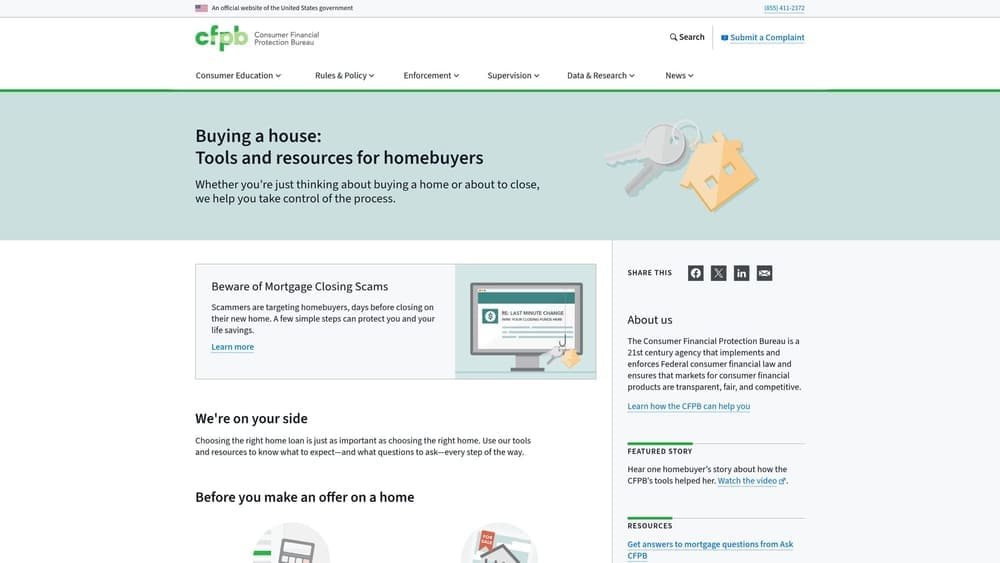
The CFPB’s “Know Before You Owe” Mortgage Toolkit is the Consumer Financial Protection Bureau’s official homebuyer education resource, covering what preapproval requires, which documents to gather, and how to compare loan offers once you have them.
Where This Tool Shines
There is no sales agenda here. The CFPB is a federal regulatory body, and this toolkit was built to help consumers understand the mortgage process before they are in a room with someone trying to close a deal. For buyers who feel overwhelmed by terminology, this is the cleanest starting point available.
The Loan Estimate and Closing Disclosure interpretation guides are particularly useful. Many buyers receive these documents without understanding what they are looking at, and the toolkit explains each line item in plain language. That knowledge directly improves your ability to compare offers once preapproval is in hand.
Key Features
Document checklist: Aligned with actual underwriting requirements, not a generic list, so you gather the right materials before your broker asks for them.
Rate explorer and closing cost worksheet: Interactive tools that help you understand what different rates and cost structures actually mean for your bottom line.
Loan Estimate interpretation guide: Walks through the standardized three-page form you receive from every broker within three business days of application.
No registration required: Access everything without creating an account or providing personal information.
Best For
First-time buyers who want to educate themselves before their first broker conversation, and any buyer who has received a Loan Estimate and wants to understand what they are comparing.
Pricing
Free, produced by a federal agency.
3. AnnualCreditReport.com
Best for: Buyers who want to review their full credit picture before any broker or institution runs a pull.
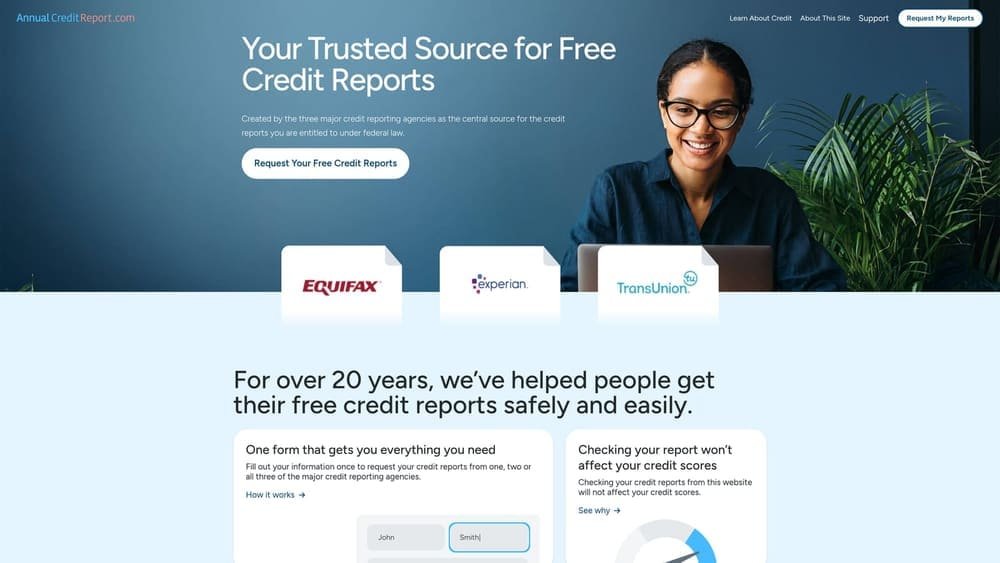
AnnualCreditReport.com is the only federally mandated free credit report source, authorized under the Fair and Accurate Credit Transactions Act (FACTA). It lets you pull all three bureau reports before beginning the preapproval process.
Where This Tool Shines
Errors on credit reports are more common than most people expect, and an unresolved dispute can delay preapproval or affect your rate. Reviewing your reports here before your broker runs any inquiry gives you time to dispute inaccuracies through the bureaus directly. That preparation can be the difference between a clean preapproval and a conditional one that requires explanation letters.
Viewing your own report never generates a hard inquiry. This is always a soft pull on your end, regardless of how many times you access it. That makes it a zero-risk first step in the preapproval preparation sequence.
Key Features
Weekly free access: Equifax, Experian, and TransUnion reports available every week at no cost, a policy expanded from the original annual access under FACTA.
No subscription or credit card required: Access is genuinely free with no trial period or upsell attached.
Dispute initiation: Each bureau report includes a direct link to their dispute process if you find an error.
Zero hard inquiry impact: Viewing your own report is always a soft pull, regardless of frequency.
Best For
Every buyer, before any preapproval conversation. This is a universal first step regardless of which loan program you are targeting or which broker you plan to work with.
Pricing
Free, federally mandated.
4. Fannie Mae HomeReady Eligibility and AMI Lookup Tool
Best for: Virginia buyers in suburban and rural counties exploring low-down-payment conventional loan options.
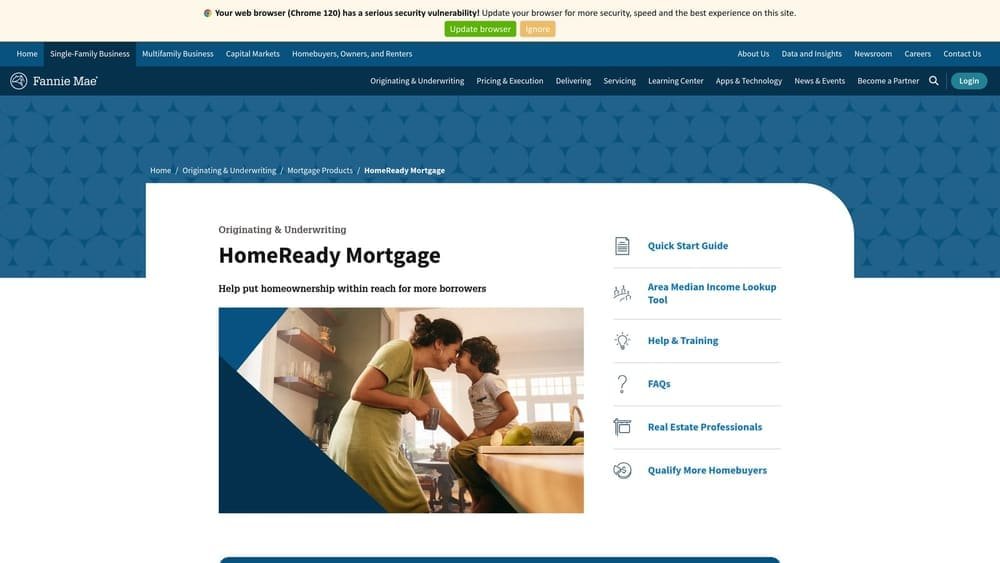
Fannie Mae’s HomeReady tool lets buyers check whether their income falls within Area Median Income thresholds for HomeReady loan eligibility, a low-down-payment conventional option with more flexible qualification criteria than standard conventional loans.
Where This Tool Shines
HomeReady is often overlooked in conversations that jump straight to FHA. For buyers in Virginia counties like Spotsylvania, Stafford, Louisa, and parts of the Shenandoah Valley, HomeReady can offer a conventional path with as little as 3% down, without the lifetime mortgage insurance that can accompany FHA loans. Knowing your AMI eligibility before your first broker conversation lets you walk in with a specific program in mind.
The lookup is address-based, so you get results specific to the census tract where you are buying, not a statewide average. That precision matters in Virginia, where AMI thresholds vary meaningfully between urban corridors and surrounding counties.
Key Features
Address-specific AMI lookup: Results tied to the specific census tract of your target property, not a regional estimate.
Virginia county coverage: Directly relevant for buyers in Spotsylvania, Stafford, Louisa, Fauquier, and other suburban-to-rural Virginia markets.
No registration required: Access the lookup without creating a Fannie Mae account.
Pre-conversation eligibility check: Identifies HomeReady eligibility before you engage a broker, so you arrive informed.
Best For
Moderate-income buyers in Virginia’s suburban and rural counties who want a conventional loan path with a low down payment and are not sure whether they qualify for HomeReady’s AMI thresholds.
Pricing
Free, no registration required.
5. VA.gov Certificate of Eligibility Portal
Best for: Veterans, active-duty service members, and surviving spouses in Virginia beginning the VA loan preapproval process.
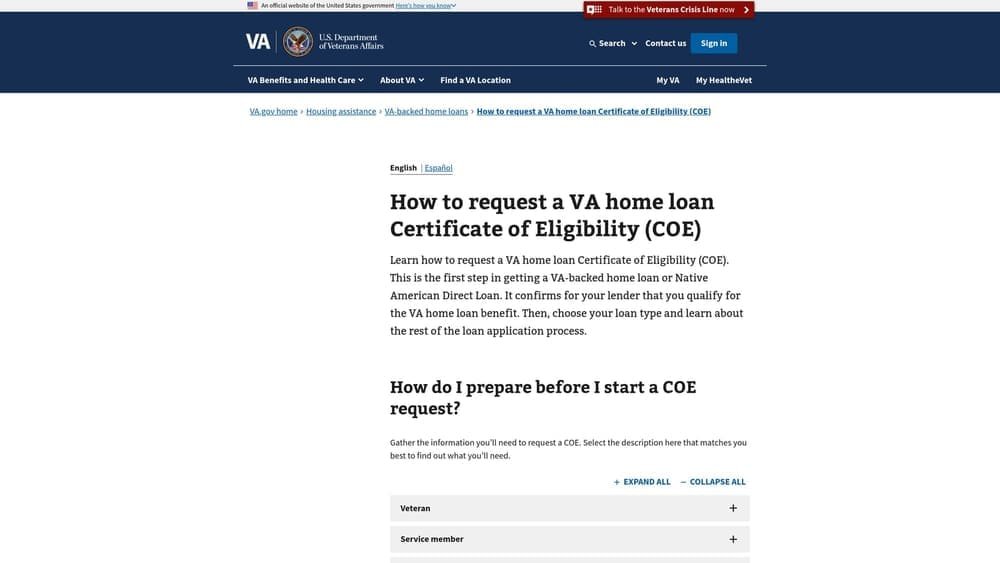
The VA Certificate of Eligibility portal is the official Department of Veterans Affairs resource where eligible borrowers can confirm or request their VA home loan entitlement before beginning the preapproval process.
Where This Tool Shines
Hampton Roads has one of the highest concentrations of VA loan-eligible buyers in the country, given proximity to Naval Station Norfolk, NAS Oceana, Langley Air Force Base, and Fort Gregg-Adams. For these buyers, confirming COE status before approaching a broker is a practical time-saver. A broker can pull the COE on your behalf, but having it in hand before the first conversation eliminates a common early-stage delay.
VA loans have no down payment requirement and no private mortgage insurance, which fundamentally changes the preapproval math compared to conventional or FHA programs. Knowing your entitlement amount before the preapproval conversation lets you and your broker set realistic purchase price targets from the start.
Key Features
Instant online access: Most veterans with VA records can access their COE immediately through the online portal without waiting for mail or phone confirmation.
Entitlement confirmation: Shows your full and remaining entitlement, which affects how much VA loan benefit you can use on a new purchase.
Required document for VA preapproval: Getting this early prevents the most common VA loan preapproval delay.
Hampton Roads and Northern VA relevance: Directly applicable to Virginia’s largest military-adjacent buyer populations.
Best For
Veterans and active-duty service members in Virginia, particularly those in Hampton Roads and Northern Virginia, who plan to use VA loan benefits and want to confirm eligibility before their first broker conversation.
Pricing
Free, provided by the Department of Veterans Affairs.
6. HUD-Approved Housing Counselor Locator
Best for: Buyers who want neutral, expert guidance on preapproval preparation before committing to a broker.
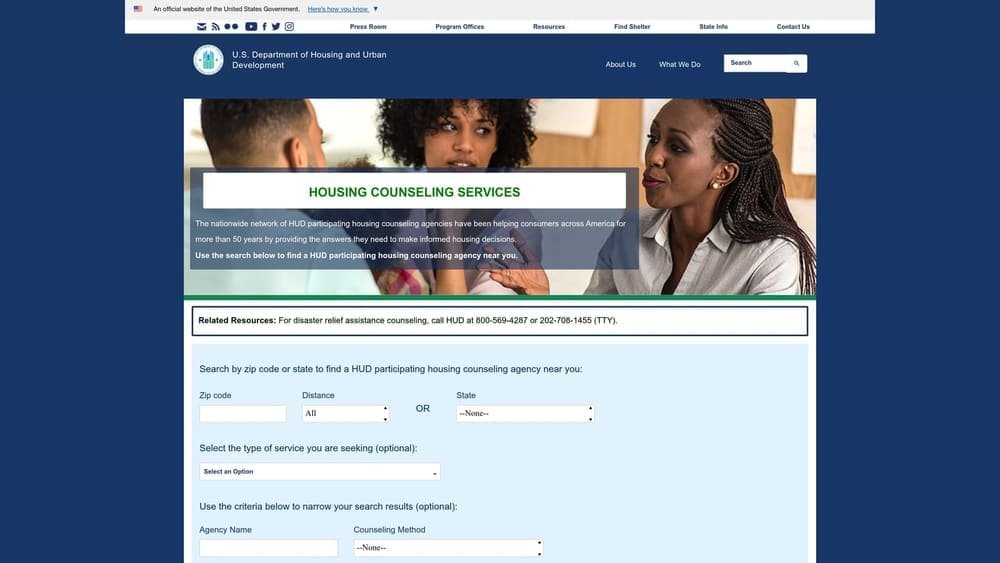
HUD’s housing counselor locator connects buyers with certified pre-purchase counselors who provide unbiased guidance on budgeting, credit, and preapproval document preparation, with no loan product to sell.
Where This Tool Shines
HUD-certified counselors are legally required to remain neutral. They cannot sell you a loan product or steer you toward a specific broker, which makes them a genuinely independent resource for buyers who want a second opinion before starting the preapproval process. For buyers with credit challenges or complex income situations, a counseling session can clarify what a broker will see and what to address first.
Some FHA loan programs and down payment assistance programs in Virginia require documented housing counseling as a condition of eligibility. Completing a session early serves double duty: it prepares you and satisfies a program requirement if it applies.
Key Features
Legally neutral counselors: HUD certification prohibits counselors from selling loan products, ensuring unbiased guidance.
Virginia-based agency options: The locator filters by state, so you can find counselors serving your specific Virginia region.
Credit and budget preparation: Covers the same document and financial readiness topics your broker will eventually ask about.
Program requirement fulfillment: Satisfies counseling requirements for certain FHA and down payment assistance programs in Virginia.
Best For
First-time buyers who want expert guidance without a sales context, buyers with credit challenges who want a clear action plan before approaching a broker, and buyers pursuing programs that require documented counseling.
Pricing
Free or low-cost, varying by agency. Many Virginia-based HUD agencies offer sessions at no charge.
7. FHFA House Price Index Calculator
Best for: Virginia buyers and refinancers who want government-sourced appreciation data to calibrate realistic loan amounts before preapproval.
The FHFA House Price Index tool provides official home price appreciation data by metro area, helping buyers understand current market value trends in specific Virginia regions before setting a target purchase price or loan amount.
Where This Tool Shines
Unlike algorithm-based home value estimates from real estate portals, the FHFA HPI is government-sourced from actual mortgage transaction data. It is the same dataset used by federal regulators and Fannie Mae for conforming loan limit adjustments. For Virginia buyers trying to understand whether their target neighborhood has appreciated significantly, this is the most credible free data source available.
For refinance borrowers, the HPI is particularly useful for estimating current loan-to-value ratio before ordering a formal appraisal. If appreciation in your area has been strong, you may have more equity than your original purchase price suggests, which affects both rate and program eligibility.
Key Features
Metro-level data: Searchable by metropolitan statistical area, including Richmond, Northern Virginia, and Hampton Roads.
Government-sourced: Based on actual mortgage transaction data, not algorithmic estimates.
Refinance LTV estimation: Helps refinancers estimate current equity position before engaging a broker.
Conforming loan limit context: The same data that drives annual FHFA conforming loan limit announcements, giving buyers insight into where the market is heading.
Best For
Buyers setting realistic purchase price targets in fast-moving Virginia markets, and refinancers estimating current LTV before beginning the preapproval process for a cash-out or rate-and-term refinance.
Pricing
Free, provided by a federal agency.
8. CFPB Mortgage Calculator — Rate and Payment Scenario Planner
Best for: Buyers who want to model full PITI payment scenarios across multiple rates before deciding on a preapproval loan amount.
The CFPB mortgage calculator includes taxes, insurance, and PMI in its output, not just principal and interest, making it the most complete free payment estimator available for Virginia buyers preparing for preapproval.
Where This Tool Shines
Most online mortgage calculators show only principal and interest. The CFPB calculator adds estimated property taxes, homeowner’s insurance, and PMI (where applicable), giving you a full PITI payment that reflects what your actual monthly obligation will look like. That full picture is what a broker uses to calculate your debt-to-income ratio during preapproval, so modeling it yourself first prevents surprises.
The rate comparison function pairs directly with the 3-scenario table below. Run your target loan amount at each rate scenario, add your local tax and insurance estimates, and you will know exactly what monthly payment range your preapproval should target before you ever submit an application.
Key Features
Full PITI output: Calculates principal, interest, taxes, insurance, and PMI together, not just P&I.
Rate scenario comparison: Allows side-by-side comparison of different rates, which is critical when evaluating broker quotes after preapproval.
No personal data required: Run unlimited scenarios without creating an account or entering identifying information.
PMI estimation: Automatically factors in PMI for scenarios with less than 20% down, giving a more accurate monthly cost picture.
Best For
Any Virginia buyer who wants to understand their full monthly payment before choosing a preapproval loan amount, and buyers comparing broker quotes who want an independent calculator to verify the numbers they are being shown.
Pricing
Free, produced by a federal agency.
3-Scenario Rate Payment Table: $400,000 Conventional 30-Year Fixed
Use this table alongside the CFPB calculator to understand what rate differences actually cost over the life of your loan. These figures represent principal and interest only on a $400,000 loan amount, representative of a Virginia purchase in 2026’s market.
Scenario A: 6.50% rate
Monthly P&I payment: $2,528 | Total interest over 30 years: approximately $510,000
Scenario B: 6.75% rate
Monthly P&I payment: $2,594 | Total interest over 30 years: approximately $533,800
Scenario C: 7.00% rate
Monthly P&I payment: $2,661 | Total interest over 30 years: approximately $557,900
The difference between Scenario A and Scenario C is $133 per month and nearly $48,000 in total interest over the life of the loan. That gap is why shopping across lenders through a broker model matters, and why your preapproval rate is not a fixed number but a starting point for negotiation.
Add your local Virginia property taxes and homeowner’s insurance to these figures using the CFPB calculator for a full PITI estimate. PMI applies if your down payment is below 20%.
Discount Points Breakeven: Should You Buy Down Your Rate?
Here is a concrete example using the rate scenarios above.
Starting point: $400,000 loan at 6.75% (Scenario B). Monthly P&I: $2,594.
One discount point: 1% of the loan amount, which equals $4,000 paid at closing. In this example, that point buys the rate down approximately 0.25% to 6.50%.
New monthly payment at 6.50%: $2,528. Monthly savings: $66.
Breakeven calculation: $4,000 divided by $66 per month equals approximately 61 months, or just over 5 years.
The verdict: If you plan to stay in the home or keep this loan beyond five years, buying the point is mathematically favorable. If you expect to refinance within that window, the upfront cost does not recover before you exit the loan.
These figures are illustrative. Actual point cost and rate reduction vary by broker, market conditions, and borrower profile. Ask your broker to run this math with your specific numbers at the time of preapproval.
Broker vs. Single-Shelf Institution: What the Comparison Actually Looks Like
One of the most consequential decisions in the preapproval process is not which program to choose. It is where you go to get preapproved. Here is how the two models compare.
Broker model (Powerhouse Mortgages / Coast2Coast Mortgage LLC): Shops hundreds of lenders through one submission. One credit pull covers the full market search. Rate competition works in the buyer’s favor because the broker is not limited to one institution’s pricing. Can pivot programs mid-process if your profile fits a different loan type better. Access to FHA, VA, USDA, conventional, renovation, and commercial in one place.
Single-shelf bank or retail lender: One rate sheet, one product menu. If you shop around by applying at multiple banks, each application may trigger a separate hard inquiry. No cross-lender optimization. If your profile does not fit their current best program, you start over elsewhere.
For most Virginia buyers, especially those in competitive markets where preapproval speed matters, the broker model provides more flexibility and typically broader rate access with less credit score risk during the shopping phase.
8 Questions Virginia Buyers Ask About Prequalification and Preapproval
1. Does prequalification hurt my credit score?
Standard prequalification using a soft pull does not affect your credit score. Powerhouse Mortgages’ NoTouch Credit PreQual uses Vantage Score 4.0 via soft pull, so there is no hard inquiry impact. Full preapproval typically requires a hard inquiry, which may cause a small, temporary score dip. Multiple mortgage hard inquiries within a short window (generally 14 to 45 days depending on the scoring model) are typically treated as a single inquiry for rate-shopping purposes.
2. How long does a mortgage preapproval last?
Most preapproval letters are valid for 60 to 90 days. After that window, your broker will need to refresh the credit pull and verify that your financial situation has not materially changed. In fast-moving Virginia markets, getting preapproved when you are actively ready to make offers, rather than months in advance, is the practical approach.
3. Can I make an offer with just a prequalification letter?
Technically yes, but in practice, sellers in competitive Virginia markets routinely require preapproval letters before accepting offers. In Northern Virginia markets like Fairfax, Arlington, and Prince William counties, a prequalification letter alone may not get your offer seriously considered. Preapproval, with verified income and credit, is the standard expectation.
4. What documents do I need for preapproval in Virginia?
Standard preapproval documentation includes two years of W-2s or tax returns (self-employed borrowers need two years of returns plus a year-to-date profit and loss statement), 30 days of recent pay stubs, two to three months of bank and asset statements, a government-issued ID, and your Social Security number for the credit pull. VA loan preapproval adds the Certificate of Eligibility. The CFPB toolkit includes a complete document checklist aligned with actual underwriting requirements.
5. What is a NoTouch Credit PreQual and how does it work?
Powerhouse Mortgages’ NoTouch Credit PreQual is a no hard inquiry mortgage pre approval starting point that uses Vantage Score 4.0 via soft pull to assess your credit profile without triggering a hard inquiry. You provide basic financial information, the system pulls a soft credit read, and you receive a credible starting point for your buying power, all without any impact on your credit score. It is a genuine mortgage pre approval without hard pull, designed for buyers who want to understand their position before committing to a full application.
6. Is preapproval the same as loan approval?
No. Preapproval is a conditional commitment based on the information provided at the time of application. Loan approval, also called clear to close, comes after a specific property has been identified, an appraisal has been completed, and the underwriter has reviewed the full file including the property itself. Preapproval confirms your creditworthiness as a borrower. Final approval confirms both the borrower and the property meet the lender’s requirements.
7. How fast can I get preapproved in Virginia?
Same-day preapproval is available for qualified buyers through Powerhouse Mortgages when documentation is complete and submitted promptly. The speed depends primarily on how quickly you can provide the required documents. Having your W-2s, pay stubs, bank statements, and ID ready before you initiate the process is the single biggest factor in same-day turnaround. This matters in Northern Virginia markets where listing-to-offer timelines can be measured in hours, not days.
8. Should I get preapproved before choosing a real estate agent?
Getting preapproved first is generally the stronger sequence. Knowing your actual buying power lets you and your agent focus immediately on properties within your confirmed range rather than spending weeks on homes that may not fit your financing. Many Virginia real estate agents prefer working with preapproved buyers because it signals seriousness and eliminates a common source of deal failure. A soft pull mortgage broker starting point like the NoTouch PreQual lets you get that clarity without credit score risk before you even choose your agent.
Making the Right Choice for Your Virginia Home Purchase
If you are a first-time buyer who is not sure where to start, begin with AnnualCreditReport.com to review your credit, then use the CFPB toolkit to understand what documents you will need. From there, the NoTouch Credit PreQual at Powerhouse Mortgages gives you a real buying power number without touching your credit score.
If you are a veteran or active-duty service member in Hampton Roads or Northern Virginia, confirm your Certificate of Eligibility at VA.gov before your first broker conversation. It eliminates the most common VA preapproval delay and ensures your broker can run accurate numbers from the start.
If you are a moderate-income buyer in a Virginia suburban or rural county, check the Fannie Mae HomeReady AMI lookup before assuming FHA is your only low-down-payment option. HomeReady may offer a conventional path with more favorable long-term mortgage insurance terms.
For rate comparison and payment modeling, use the CFPB mortgage calculator alongside the 3-scenario table in this article. Run your target loan amount at each rate scenario, add your local tax and insurance estimates, and you will know exactly what monthly payment range your preapproval should target.
Ready to move from curious to offer-ready? Get your free NoTouch Credit PreQual today and find out your buying power without a credit score impact. Same-day preapproval is available for qualified buyers, with access to hundreds of lenders through one submission.

