

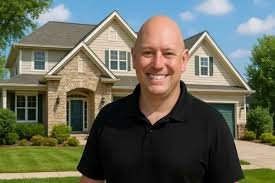
Buying your first home in Virginia in 2026 is genuinely exciting — and genuinely challenging. Median home prices in Richmond, Henrico, and Chesterfield have climbed steadily, with Henrico County hovering in the $390,000 to $430,000 range. Fredericksburg, Spotsylvania, and the Hampton Roads corridor tell a similar story: strong demand, limited inventory, and prices that make the down payment hurdle feel steep for buyers without existing equity to roll forward.
Here’s something many buyers don’t realize: “first-time homebuyer” doesn’t necessarily mean you’ve never owned a home. Under most federal program definitions, you qualify as a first-time buyer if you haven’t owned a primary residence in the last three years. That reopens eligibility for a meaningful number of Virginians who owned before, sold, and are now re-entering the market.
This guide is not generic advice about saving money or checking your credit. It covers specific loan program strategies available to Virginia buyers in 2026: FHA, VA, USDA, conventional 3% down options, and Virginia-specific pathways. More importantly, it explains how these programs interact with each other — because understanding which programs can stack together, and in what order, is where real savings happen.
One foundational note before diving in: Powerhouse Mortgages offers a NoTouch Credit PreQual using Vantage Score 4.0, which identifies your program eligibility across all of these options without triggering a hard credit inquiry. That matters because protecting your credit score during early exploration gives you more flexibility and more options. We’ll cover that first.
Author: Duane Buziak, Mortgage Maestro | NMLS: 1110647 | Licensed in VA · FL · TN · GA
1. Start With a NoTouch Credit PreQual — Before You Pick Any Program
The Challenge It Solves
Most buyers make a critical mistake early in the process: they pick a loan program before they know what they qualify for. They assume FHA because a friend used it, or they rule out VA because they’re not sure about eligibility. Meanwhile, each lender they visit pulls a hard inquiry — dinging their credit score and potentially narrowing their options.
The smarter starting point is a soft-pull PreQual that maps your actual eligibility across every program before you commit to anything.
The Strategy Explained
Powerhouse Mortgages uses Vantage Score 4.0 technology to run a NoTouch Credit PreQual — a soft pull that does not appear on your credit report and does not affect your score. This gives Duane Buziak a complete picture of your credit profile, debt-to-income ratio, and program eligibility without the risk of a hard inquiry.
Think of it like a medical consultation before a procedure. You want a full diagnosis before choosing a treatment. The NoTouch PreQual tells you which programs you’re eligible for, what down payment scenarios look like across each one, and where your credit profile sits relative to program thresholds — all before you’ve made a single commitment.
Implementation Steps
1. Submit your basic financial information for the NoTouch PreQual — no hard credit pull required at this stage.
2. Review your Vantage Score 4.0 results and program eligibility summary across FHA, VA, USDA, and conventional options.
3. Use the eligibility map to prioritize which programs to explore in depth before approaching sellers or making offers.
Pro Tips
Don’t let multiple lenders each run a hard pull while you’re shopping. The NoTouch PreQual gives you the information you need to walk into rate conversations from a position of knowledge, not guesswork. Once you’re ready to formally apply, a hard pull happens once — not repeatedly across every lender you visit.
2. FHA Loans — The 3.5% Down Workhorse for Credit Scores Down to 500
The Challenge It Solves
Many first-time buyers in Virginia have solid income but credit scores that fall below the 620-640 threshold most conventional lenders prefer. FHA loans were specifically designed for this situation: they accept lower credit scores and smaller down payments, making homeownership accessible earlier in a buyer’s financial journey.
The Strategy Explained
FHA loans, backed by the U.S. Department of Housing and Urban Development, allow down payments as low as 3.5% for borrowers with credit scores of 580 or above. Borrowers with scores between 500 and 579 can still qualify but must put 10% down. (Source: HUD.gov)
The trade-off is Mortgage Insurance Premium (MIP): an upfront MIP of 1.75% of the loan amount, plus an annual MIP that typically runs between 0.55% and 0.85% of the loan balance depending on term and LTV. Unlike conventional PMI, FHA MIP on loans with less than 10% down persists for the life of the loan — which is a key factor in the breakeven calculation below.
Virginia FHA County Loan Limit Table (2026 — Standard Single-Family):
County/City | 2026 FHA Loan Limit
Richmond City | $524,225
Henrico County | $524,225
Chesterfield County | $524,225
Hanover County | $524,225
Fredericksburg / Spotsylvania / Stafford | $524,225
Hampton Roads (Virginia Beach, Chesapeake, Newport News) | $524,225
Charlottesville / Albemarle | $546,250
Williamsburg / York County | $524,225
Goochland / Louisa / Caroline | $524,225
Note: FHA loan limits are set annually by HUD. Verify current limits at HUD.gov before application.
Breakeven Math: FHA MIP vs. Conventional PMI on a $375,000 Henrico Purchase
Scenario: $375,000 purchase price, 3.5% down ($13,125), loan amount $361,875, 30-year fixed, credit score 620.
FHA Option:
Upfront MIP: 1.75% × $361,875 = $6,333 (typically financed into the loan)
Annual MIP at 0.85%: $361,875 × 0.0085 = $3,076/year = $256/month
FHA MIP persists for the life of the loan at under 10% down.
Total MIP cost over 7 years (typical ownership period): $256 × 84 months = $21,504
Conventional Option (same score, 5% down):
Down payment: $18,750 (additional $5,625 upfront vs. FHA)
PMI at approximately 1.10% for a 620 score: $356,250 × 0.011 = $3,919/year = $327/month
PMI cancels at 80% LTV — estimated at approximately month 68 at standard amortization.
Total PMI cost over 68 months: $327 × 68 = $22,236
Breakeven Observation: At a 620 credit score, FHA MIP and conventional PMI costs over a 7-year horizon are comparable — but conventional PMI cancels while FHA MIP does not. The crossover point favors conventional if you plan to stay beyond 7 years and can manage the slightly higher down payment. If your score is below 620, FHA becomes the clear path. For a deeper look at this comparison, see our guide on FHA vs conventional loans in Virginia.
Implementation Steps
1. Confirm your credit score range via the NoTouch PreQual to determine whether you’re in the 580+ (3.5% down) or 500-579 (10% down) tier.
2. Verify the current FHA loan limit for your target county at HUD.gov and confirm your purchase price is within range.
3. Run the breakeven math on MIP vs. PMI based on your actual score, down payment, and expected time in the home before committing to FHA over conventional.
Pro Tips
FHA is often the right starting point for buyers with scores in the 580-619 range, but it’s not automatically the cheapest option for buyers with scores above 680. Always run the side-by-side comparison. Also note: FHA allows seller concessions up to 6% of the purchase price — a meaningful lever in negotiation.
3. VA Loans — Zero Down and No PMI for Virginia’s Military Families
The Challenge It Solves
Virginia is home to one of the largest concentrations of active duty military, veterans, and surviving spouses in the country — particularly in Hampton Roads, Newport News, Chesapeake, Williamsburg, Yorktown, Fredericksburg, and Stafford. For eligible borrowers, VA loans eliminate two of the biggest first-time buyer obstacles: the down payment and monthly mortgage insurance.
The Strategy Explained
VA loans are backed by the U.S. Department of Veterans Affairs and are available to veterans, active duty service members, National Guard members, reservists, and eligible surviving spouses. Key benefits include zero down payment, no monthly PMI, competitive interest rates, and limits on closing costs. (Source: VA.gov)
VA loans do carry a one-time VA Funding Fee, which varies based on down payment amount, loan type, and whether it’s a first or subsequent use. This fee can be financed into the loan. Borrowers with service-connected disabilities rated at 10% or more are exempt from the funding fee entirely. Our complete guide on how to get a VA loan in Virginia walks through every eligibility detail.
VA Funding Fee Table (2026 — Purchase Loans):
Down Payment | First Use | Subsequent Use
0% down | 2.15% | 3.30%
5% to 9.99% down | 1.50% | 1.50%
10% or more down | 1.25% | 1.25%
Disability-Exempt | 0% | 0%
Note: VA funding fees are subject to change. Confirm current rates at VA.gov.
Worked Seller Concession Example — $400,000 Newport News Purchase, VA Loan, Zero Down:
VA loans allow seller concessions up to 4% of the purchase price for items outside normal closing costs (such as prepaid taxes, insurance, and the VA funding fee), plus the buyer’s actual closing costs on top of that.
Loan amount: $400,000
VA Funding Fee (2.15%, first use, financed): $8,600 added to loan = $408,600 total loan
Estimated closing costs: $7,500
Seller concession negotiated at 3% of purchase price: $12,000
Net cash-to-close after seller concession: $7,500 − $12,000 = $0 out of pocket at closing (with excess applied to prepaids)
This is why VA loans, when structured correctly, can result in a true zero-cash-to-close transaction — a significant advantage in markets like Hampton Roads and Fredericksburg where military buyers are active.
Implementation Steps
1. Obtain your Certificate of Eligibility (COE) through VA.gov or allow your lender to pull it electronically during the application process.
2. Confirm whether you qualify for a funding fee exemption based on any service-connected disability rating.
3. Structure your offer with your lender’s guidance on seller concession strategy to minimize or eliminate cash-to-close.
Pro Tips
VA loans have no loan limit for eligible borrowers with full entitlement as of 2020 legislation — meaning you can finance a higher-priced home in Williamsburg or Chesapeake without a jumbo overlay, as long as you qualify on income and the property appraises. Always confirm current entitlement status if you’ve had a prior VA loan.
4. Conventional 3% Down — When Your Score Is Strong and You Want to Avoid FHA MIP
The Challenge It Solves
Buyers with credit scores above 680 often pay more than necessary by defaulting to FHA. Conventional loan programs with 3% down — specifically Fannie Mae HomeReady and Freddie Mac Home Possible — offer a lower total cost of ownership for creditworthy buyers, because PMI is cancellable and rates improve significantly with stronger scores.
The Strategy Explained
HomeReady (Fannie Mae) and Home Possible (Freddie Mac) both allow down payments as low as 3% for first-time buyers. Both programs accept income from non-borrower household members in qualifying, which helps buyers in multi-generational households in markets like Chesterfield, Glen Allen, and Short Pump where family living arrangements are common. Understanding Freddie Mac guidelines in detail can help you determine whether Home Possible is the right fit for your income and property location.
The key advantage over FHA: conventional PMI cancels automatically when your loan balance reaches 80% of the original purchase price, and you can request cancellation even earlier with an appraisal showing sufficient equity. FHA MIP at under 10% down does not cancel.
PMI vs. FHA MIP Breakeven Math — $375,000 Chesterfield Purchase, 3% Down, 720 Credit Score:
Loan amount: $363,750 (3% down = $11,250)
Conventional HomeReady PMI (720 score, 97% LTV):
Estimated PMI rate: approximately 0.65% annually
Monthly PMI: $363,750 × 0.0065 ÷ 12 = $197/month
Total PMI cost: $197 × 82 = $16,154
FHA MIP (same score, 3.5% down):
Down payment: $13,125; Loan: $361,875
Monthly MIP at 0.55% (720 score tier): $361,875 × 0.0055 ÷ 12 = $166/month
MIP persists for life of loan (30 years)
Total MIP cost over 30 years: $166 × 360 = $59,760
Breakeven Conclusion: For a 720 credit score buyer, conventional PMI costs $16,154 total before cancellation. FHA MIP costs $59,760 over the life of the loan. The conventional path saves approximately $43,600 over 30 years — even though the monthly FHA MIP payment is lower. The crossover month where conventional total cost surpasses FHA occurs at approximately month 82, after which FHA continues accumulating cost while conventional PMI is gone.
Implementation Steps
1. Confirm your credit score is 680 or above via the NoTouch PreQual — this is the threshold where conventional typically outperforms FHA on total cost.
2. Ask specifically about HomeReady or Home Possible eligibility, as both have income limits tied to area median income (AMI) for the property’s census tract.
3. Run the full PMI vs. MIP breakeven comparison with your lender using your actual score, purchase price, and expected years in the home.
Pro Tips
The conforming loan limit for most Virginia counties in 2026 is $806,500 for a single-family home. If your purchase price is below this threshold, you have full access to conventional pricing. Above this limit, jumbo guidelines apply and the 3% down option typically goes away. Plan your purchase price accordingly in higher-cost markets like Charlottesville and Albemarle. Review the full conventional loan requirements to understand exactly where your profile stands before committing to a program.
5. USDA Loans — Zero Down for Rural and Suburban Virginia Buyers
The Challenge It Solves
Many buyers assume USDA loans are only for farmland or deeply rural areas. In Virginia, that assumption leaves money on the table. A significant number of communities that feel suburban — including parts of Goochland, Louisa, Caroline County, Ashland, and the Lake Anna area — fall within USDA-eligible geographic zones, making zero-down financing available to buyers who don’t realize they qualify.
The Strategy Explained
USDA Rural Development loans offer 100% financing (zero down payment) for properties in eligible areas, with no monthly PMI. Instead, USDA uses a guarantee fee structure: a 1.0% upfront guarantee fee (financed into the loan) and a 0.35% annual fee on the outstanding balance. Both figures are notably lower than FHA’s MIP structure for most borrowers. If you’re weighing USDA against other zero down payment mortgage options, the cost comparison below makes the tradeoffs clear.
Income limits apply — USDA loans are designed for moderate-income households, and limits vary by county and household size. Verify current income limits and property eligibility at the official USDA eligibility site.
Three-Way Cost Comparison: USDA vs. FHA vs. VA — $300,000 Goochland Purchase, Zero Down:
Program | Down Payment | Upfront Fee | Monthly Insurance | Notes
USDA | $0 | 1.0% ($3,000) | $87.50/mo (0.35%) | Income limits apply; property must be in eligible zone
FHA | $10,500 (3.5%) | 1.75% ($5,076) | $213/mo (0.85%) | No income limit; broader property eligibility
VA | $0 | 2.15% ($6,450) | $0/mo | Requires military eligibility; no income limit
Calculations based on $300,000 purchase, standard 30-year fixed. FHA figures reflect 3.5% down scenario. All fees subject to change — verify current rates at USDA.gov, HUD.gov, and VA.gov.
For a non-military buyer in Goochland or Caroline County, USDA’s combination of zero down and low annual fee makes it the most cost-efficient option — often beating FHA on both upfront and ongoing costs simultaneously.
Implementation Steps
1. Check property eligibility using the USDA eligibility map at eligibility.sc.egov.usda.gov before falling in love with a specific home.
2. Verify household income against current USDA income limits for your county and household size.
3. Compare USDA total cost against FHA using the table framework above, factoring in your actual down payment availability and planned years in the home.
Pro Tips
USDA loans typically have slightly longer processing timelines than FHA or conventional because they require a USDA conditional commitment in addition to standard underwriting. Build this into your offer timeline. In competitive markets like Ashland and Hanover County, discuss timeline expectations with your lender before making an offer so sellers aren’t surprised.
6. Stacking Strategies — How to Layer Programs for Maximum Advantage
The Challenge It Solves
Most first-time buyers think of loan programs as either/or choices. The more sophisticated approach treats your base loan program as one layer of a stack — and identifies what can be added on top to reduce cash-to-close, lower your rate, or both. Understanding what stacks legally and what doesn’t is where experienced mortgage brokers earn their value.
The Strategy Explained
Virginia Housing (formerly VHDA) offers down payment assistance and closing cost assistance programs that can be layered on top of FHA, VA, USDA, and conventional loans for qualifying buyers. These are not grants — they are typically structured as second mortgages with deferred or low-rate payment terms. Separately, seller concessions and lender credits can further reduce out-of-pocket costs at closing. Our guide on first home loan programs covers how these layers interact across different buyer profiles.
The key is understanding the concession limits by loan type, because exceeding them can cause the excess to be deducted from the loan amount rather than applied to closing costs — a common error in purchase negotiations.
Seller Concession Limits by Loan Type:
Loan Type | Maximum Seller Concession | Notes
FHA | 6% of purchase price | Includes closing costs and prepaids
VA | 4% of purchase price (concessions) + actual closing costs | Two-part limit; funding fee can be covered
USDA | 6% of purchase price | Consistent with FHA structure
Conventional (LTV above 90%) | 3% of purchase price | Increases as LTV decreases
Conventional (LTV 75.01%-90%) | 6% of purchase price | —
Conventional (LTV 75% or below) | 9% of purchase price | —
Worked Cash-to-Close Example: $375,000 Chesterfield Home, FHA Loan, First-Time Buyer
Purchase price: $375,000
Down payment (3.5%): $13,125
Estimated closing costs: $8,500
Prepaid items (taxes, insurance, escrow): $4,200
Total gross cash needed: $25,825
Stacking reductions applied:
Seller concession negotiated at 4% ($15,000): covers closing costs and prepaids in full
Virginia Housing DPA second mortgage: covers $10,000 of down payment
Lender credit (0.25% rate adjustment): $900 applied to remaining costs
Net cash-to-close after stacking: $25,825 − $15,000 − $10,000 − $900 = $0 to $925 range
This is a realistic scenario — not a guarantee — but it illustrates why stacking awareness matters. The same home with an unstacked approach requires over $25,000 at closing. A properly structured stack can reduce that to near zero.
Implementation Steps
1. Identify your base loan program eligibility first (FHA, VA, USDA, or conventional) via the NoTouch PreQual.
2. Ask your lender specifically about Virginia Housing program compatibility with your base loan type and income level.
3. Model the seller concession strategy before making an offer — know the maximum allowable concession for your loan type and build it into your negotiation approach.
Pro Tips
Lender credits and seller concessions cannot both be maximized simultaneously without hitting program caps. Work with your lender to prioritize: if the seller is willing to contribute, that often outweighs a lender credit because it comes from the transaction rather than a rate adjustment. Sequence matters.
7. How Powerhouse Mortgages Compares to Other Virginia Lenders for First-Time Buyers
The Challenge It Solves
Virginia first-time buyers are marketed to aggressively by national lenders with large advertising budgets. Understanding what differentiates lenders on the criteria that actually matter — program access, credit pull approach, speed, and cost — helps buyers make an informed choice rather than a brand-recognition choice.
The Strategy Explained
The table below compares Powerhouse Mortgages against several well-known Virginia and national lenders on factors most relevant to first-time buyers. This comparison is based on publicly available information and is intended to be factual and educational, not to disparage any competitor. When evaluating your options, understanding the local mortgage broker benefits versus a retail lender can significantly affect both your rate and your approval odds.
Lender Comparison Table: First-Time Buyer Criteria
Lender | Lender Type | Credit Pull at PreQual | Lender Access | Program Range | Virginia Local Focus
Powerhouse Mortgages | Independent Broker | Soft pull (NoTouch, no credit hit) | 100+ wholesale lenders | FHA, VA, USDA, Conventional, Jumbo, Non-QM, Bank Statement, DSCR | Yes — VA, FL, TN, GA only; deep local market knowledge
Rocket Mortgage | Direct Lender (Retail) | Hard pull typically required | Single lender (own products) | FHA, VA, Conventional, Jumbo | National; limited local expertise
Movement Mortgage | Direct Lender (Retail) | Hard pull typically required | Single lender (own products) | FHA, VA, Conventional | National with local branches
PrimeLending | Direct Lender (Retail) | Hard pull typically required | Single lender (own products) | FHA, VA, Conventional, Jumbo | Regional presence in VA
CapCenter | Direct Lender (Retail) | Hard pull typically required | Single lender (own products) | Conventional, FHA, VA | Virginia-focused; known for fee transparency
Alcova Mortgage | Direct Lender (Retail) | Hard pull typically required | Single lender (own products) | FHA, VA, Conventional, USDA | Virginia-focused; strong local presence
Atlantic Bay Mortgage | Direct Lender (Retail) | Hard pull typically required | Single lender (own products) | FHA, VA, Conventional, Jumbo | Southeast regional; VA presence
Key Differentiator Explained: As an independent mortgage broker, Powerhouse Mortgages shops your loan across 100+ wholesale lenders simultaneously. A direct lender can only offer their own products at their own pricing. This distinction matters most when your profile is complex — lower credit score, self-employed income, non-standard property type — because a broker can find the lender whose guidelines best fit your specific situation. On straightforward files, it means competitive rate shopping happens on your behalf rather than requiring you to call six lenders yourself.
The NoTouch Credit PreQual is also a meaningful differentiator: most retail lenders require a hard inquiry before giving you a meaningful rate quote. Powerhouse Mortgages provides program eligibility and preliminary pricing without that credit hit.
Implementation Steps
1. When comparing lenders, ask each one directly: “Is this a soft pull or hard pull at the pre-qualification stage?”
2. Ask how many investors or lenders they can submit your loan to — the answer reveals whether they’re a broker or a direct lender.
3. Once you have a Loan Estimate from any lender, bring it to Powerhouse Mortgages for a side-by-side comparison on rate, fees, and total cost.
Pro Tips
CapCenter and Alcova are both Virginia-based lenders with solid reputations and genuine local knowledge — they’re worth considering. The honest differentiator isn’t quality; it’s access. A broker with 100+ lenders can often find better pricing on non-standard profiles that a single-lender shop would price conservatively or decline. For straightforward conventional files with strong credit, the gap narrows. For complex files, it widens significantly.
Your Virginia First-Time Buyer Implementation Roadmap
The seven strategies above aren’t meant to be read and forgotten. They’re meant to be executed in sequence. Here’s how to put them together.
Step 1 — NoTouch PreQual First: Before you visit a single open house or talk to a listing agent, get your NoTouch Credit PreQual through Powerhouse Mortgages. This gives you a real picture of program eligibility without affecting your credit score. It takes the guesswork out of every subsequent decision.
Step 2 — Match Your Profile to the Right Program: Use the program comparison framework in this guide. If you have military eligibility, VA is almost always the first conversation. If your score is above 680 and you can manage 3-5% down, run the conventional vs. FHA breakeven math. If you’re targeting Goochland, Louisa, Caroline County, Ashland, or the Lake Anna area, check USDA eligibility before assuming you need a down payment.
Step 3 — Understand Stacking Before You Make an Offer: Know your seller concession limits, your Virginia Housing DPA eligibility, and your lender credit options before you’re sitting at a negotiating table. This knowledge shapes your offer strategy, not just your financing.
Step 4 — Get Formally Preapproved and Bring Competing Offers: Once you’ve identified your program and are ready to move, get a formal preapproval. Then, if you’ve received a Loan Estimate from another lender, bring it. Powerhouse Mortgages will give you a direct comparison on rate, fees, and total cost — not a vague promise to beat it.
The right program choice doesn’t just affect your closing day. It affects your monthly payment, your total interest cost over the life of the loan, and how much cash you have available after closing for repairs, furnishings, and reserves. On a $375,000 loan, the difference between a well-structured stack and an unadvised default to FHA can represent tens of thousands of dollars over a standard ownership horizon.
To start with a free NoTouch Credit PreQual and explore which of these programs fits your specific situation in Virginia, Learn more about our services at Powerhouse Mortgages.
Contact Duane Buziak, Mortgage Maestro, directly to discuss your scenario — whether you’re in Richmond, Chesterfield, Midlothian, Fredericksburg, Hampton Roads, Williamsburg, Roanoke, Lynchburg, or anywhere across Virginia.
Frequently Asked Questions
Q: Do I have to be a true first-time buyer to use these programs?
A: Not necessarily. Most federal programs define “first-time buyer” as anyone who has not owned a primary residence in the last three years. If you sold a home three or more years ago, you may qualify again.
Q: Will a NoTouch PreQual show up on my credit report?
A: No. The Vantage Score 4.0 soft pull used by Powerhouse Mortgages is a soft inquiry and does not appear on your credit report or affect your score.
Q: Can I use Virginia Housing assistance with a VA loan?
A: Compatibility depends on the specific Virginia Housing program and your VA entitlement status. Ask your lender to confirm which programs can be layered with VA financing for your specific scenario.
Q: What credit score do I need for a conventional 3% down loan?
A: Fannie Mae HomeReady and Freddie Mac Home Possible typically require a minimum score of 620, though lender overlays may require higher. The economic benefit of conventional over FHA increases meaningfully above 680.
Q: Are USDA loans really available near Richmond and Fredericksburg?
A: Yes, in specific areas. Communities like Goochland, Louisa, Caroline County, Ashland, and parts of the Lake Anna region have USDA-eligible zones. Use the official USDA eligibility map to check a specific address before assuming ineligibility.
Q: How does Powerhouse Mortgages’ access to 100+ lenders benefit me as a first-time buyer?
A: It means your loan profile is matched to the lender whose guidelines and pricing best fit your situation, rather than being forced into one lender’s product set. For buyers with non-standard credit profiles, self-employment income, or unique property types, this access can mean the difference between approval and denial — or between a competitive rate and a conservative one.
Legal Disclaimers
This article is for educational and informational purposes only and does not constitute a commitment to lend or an offer of credit. All loan programs, rates, fees, and terms are subject to credit approval, underwriting guidelines, and market conditions at the time of application. Loan limits, funding fees, MIP rates, and guarantee fees referenced in this article are based on information available as of publication and are subject to change. Verify current figures with HUD.gov, VA.gov, and USDA.gov before making financial decisions. All breakeven calculations and worked examples are illustrative estimates based on assumed inputs and do not represent guaranteed outcomes. Individual results will vary based on credit profile, loan amount, property type, and lender guidelines. Virginia Housing program availability and terms are subject to change; contact Virginia Housing directly or through an approved lender for current program details. Powerhouse Mortgages is an independent mortgage broker licensed in Virginia, Florida, Tennessee, and Georgia. NMLS Consumer Access: nmlsconsumeraccess.org. Equal Housing Opportunity.
Duane Buziak, Mortgage Maestro | NMLS: 1110647 | Licensed in VA · FL · TN · GA | VA Broker of the Year 2024-2025 | Top 1% Nationwide | Coast2Coast Mortgage | DuaneBuziakMortgageMaestro.com | (804) 212-8663

