

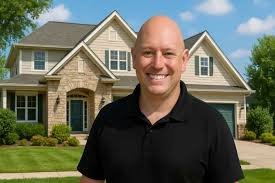
By Duane Buziak, NMLS #1110647
Rural home loan programs can cut or remove the down payment, yet many Virginia buyers never test them because they assume “rural” means remote farmland. In practice, eligibility follows a map, not a mood: plenty of small towns, exurbs, and edges of mid-sized cities qualify, and plenty of homes that look rural do not. Choosing well is a screening and comparison process, not a single product decision. These seven strategies are the order I work through with Virginia buyers, from checking the address to pricing the property’s quirks, so you see real payments before you make an offer.
1. Check Address Eligibility Before You Fall in Love with a House
USDA eligibility is attached to the property’s location, not to the buyer or the town’s reputation. That is why two similar homes in the same Virginia county can land on opposite sides of the line. For illustration, imagine a buyer who finds a three-bedroom house on one road inside an eligible area and a near-identical house a mile away just outside it. The first can be financed with 0% down. The second might need 3.5% down with FHA or more with a conventional loan, which on a $300,000 purchase is $10,500 or more in cash you did not plan on.
Screening early works because it removes emotional momentum from the decision. You never tour a house you cannot finance the way you intended. Our USDA loan Virginia guide walks through how the mapped eligibility areas work across the state.
- Open the USDA property eligibility site and enter the full street address.
- Save a screenshot or PDF of the result with the date.
- Ask your agent to add eligibility to your search filters and to send you only addresses that pass.
- Before you write an offer, ask Duane Buziak to confirm the address, since boundaries are periodically updated.
The common mistake is trusting a listing that says “rural” or assuming a small town qualifies as a whole. Another is relying on a map result you saved months ago. Measure: the share of shortlisted homes confirmed eligible before the first showing. Aim for 100%.
2. Match the Program to Your Income: USDA Guaranteed vs. Direct
USDA runs two single-family tracks under Section 502. The Guaranteed program backs loans made through approved mortgage companies, and it is the one most buyers use. The Direct program is funded by USDA itself, carries much tighter income caps, and can include payment assistance. For the Guaranteed track, household income generally cannot exceed 115% of the area median income (AMI) for your county and household size, as of 2026. Confirm the current figure on the USDA Guaranteed Loan Program page, because limits are updated.
The test that surprises people is that it counts household income, not just borrower income. Suppose a four-person household has two borrowers earning a combined $95,000 and an adult son living at home earning $28,000. The relevant total is $123,000 before any allowed adjustments, and that is what gets compared against the county limit. A buyer who only checked $95,000 could fail the test at underwriting.
- List income from every adult in the household, including those not on the loan.
- Look up your county’s limit for your household size on USDA’s site.
- Note the adjustments USDA allows, such as certain childcare costs and dependent deductions, and have them verified.
- Send the numbers to Duane Buziak to confirm which track fits.
Rural financing is not reserved for the lowest earners; the Guaranteed cap sits above median income in most counties. If your household is closer to the limit, our rundown of government-backed home loans shows what else may fit. Measure: your household income as a percentage of the county limit. Under 100% leaves a cushion, while 110% to 115% leaves little room for a raise or bonus before closing.
3. Use the Zero-Down Feature Without Ignoring the Fees
Zero down means zero down payment, not zero cost. USDA Guaranteed loans carry an upfront guarantee fee and an annual fee. As of 2026 these have been 1.00% upfront and 0.35% annually, but confirm current figures with USDA before you rely on them. The upfront fee can be rolled into the loan balance, and the annual fee is billed monthly as part of the payment. You will also pay normal closing costs, so ask about our no-out-of-pocket closing options rather than assuming any costs vanish.
Rate sensitivity matters more than most buyers expect. These are illustrative figures for a $300,000, 30-year fixed loan, principal and interest only, not quotes:
- 6.25%: $1,847 per month, about $364,974 total interest over 30 years.
- 6.50%: $1,896 per month, about $382,632 total interest.
- 6.75%: $1,946 per month, about $400,484 total interest.
Each quarter point moves the payment by roughly $49 to $50 and the lifetime interest by about $17,000 to $18,000. On top of that comes the annual fee (0.35% on $300,000 is about $87.50 per month at the start), taxes, and homeowners insurance.
The pitfall is treating zero down as automatically cheapest. Keeping $10,000 in your account is valuable, but only if the monthly cost holds up against alternatives. Request a loan estimate that itemizes the guarantee fee, annual fee, and escrow, and review the layout using the CFPB’s loan estimate guide. Buyers who want to understand how credit shapes pricing can also read our guide on the minimum credit score for a home loan. Measure: total monthly payment including fees and escrow against the same figure under other programs, weighed against the cash you keep.
4. Compare USDA Against FHA, VA, and Conventional Side by Side
USDA is not the only rural option, and it is not always the cheapest. An eligible veteran buying in a rural-eligible Virginia area may find that the VA home loan carries no monthly mortgage insurance and no down payment, with a funding fee that varies by use and down payment and is waived for veterans with qualifying disability ratings. A non-veteran under the income cap may find USDA’s 0.35% annual fee beats the annual mortgage insurance premium on an FHA loan, which has been 0.55% for many 30-year, low-down-payment loans as of 2026. Both depend on the file.
Ask Duane Buziak for parallel quotes on the same property, then fill in a side-by-side like this:
- USDA Guaranteed: 0% down; upfront fee plus annual fee; household income cap; property must be in an eligible area and be your primary residence.
- VA: 0% down; funding fee, no monthly mortgage insurance; requires eligible service; no area restriction.
- FHA: 3.5% down at qualifying scores; upfront plus annual mortgage insurance; no income cap; flexible on credit.
- Conventional: as little as 3% down on some programs; private mortgage insurance that can drop off; no income cap on most; pricing tied to credit score and loan-level adjustments (LLPAs).
The mistake is locking into USDA because it sounds designed for rural homes. Our FHA vs conventional loan comparison and our explainer on VA loan advantages over conventional mortgages show the real numbers behind each path. Measure: monthly payment and cash to close for each program on the same house. If two programs land within $20 per month, let property rules and credit flexibility break the tie.
5. Shop Rates Through a Broker With Access to Hundreds of Lenders
USDA sets program rules, but each investor adds its own overlays: extra requirements such as a higher minimum credit score, tighter debt-to-income limits, or restrictions on certain property types. For illustration, one investor might want a 680 score on a USDA file while another approves the same file at 640 with a lower rate. A single-shelf quote shows you only one of those answers. As a broker, Duane Buziak can place the file with whichever investor fits the property and borrower, which matters most for rural homes with unusual features. For a closer look at this approach, see our piece on broker vs. single lender rate access.
Give the full scenario upfront so quotes are comparable: credit profile, household income, address, property type, and cash available. Then compare the rate, fees, and lock terms across several investors.
If a quote offers discount points, run the breakeven before saying yes. Suppose you pay $3,000 in points and the payment drops $60 per month. $3,000 divided by $60 is 50 months, a little over four years. Keep the loan longer than that and the points pay off. Sell or refinance sooner and you lose money.
The pitfalls are accepting one quote as “the market” and buying points without estimating how long you will keep the loan. Measure: the spread in rate and fees across quotes, plus the breakeven month on any points. Treat quotes as estimates; no rate or approval is guaranteed.
6. Get a No-Touch Credit Preapproval Before You Tour Rural Properties
Hard credit pulls from several providers can trim scores and clutter your report right when you need it clean. A NoTouch Credit PreQual or Preapproval from Duane Buziak works as a soft credit pull mortgage preapproval: you see your qualifying range without a hard inquiry. Rural shoppers benefit twice, because the preapproval can model USDA, FHA, and VA together, so you learn which programs fit before you pick a neighborhood.
Imagine a buyer weighing all three programs. A no hard inquiry mortgage pre approval lets them compare without score damage, and the resulting letter goes in with the offer, which sellers in competitive areas notice. If you are buying for the first time, our best mortgage loans for first-time buyers guide shows how preapproval fits into the larger plan.
- Apply with Duane Buziak, a soft pull mortgage broker, and share income and asset documents.
- Receive the preapproval and review the programs it supports.
- Test your target addresses against USDA eligibility (strategy 1).
- Keep documents current so the letter stays usable through your search.
Two mistakes recur. One is letting multiple providers run hard pulls early “just to compare.” The other is treating a preapproval as the end of underwriting. It is not: full verification, appraisal, and title still come later, and a new debt or job change can alter the outcome. If your score needs work first, read how to improve your credit score for home buying. Measure: days from application to preapproval letter, and your hard inquiry count, which should be zero before you go under contract.
7. Plan for Rural-Specific Property Hurdles: Appraisal, Well, Septic, and Condition
Rural homes often come with private wells, septic systems, longer driveways, and more land. Each can delay a closing, because USDA and other programs require the home to be safe, sound, and sanitary, and the appraiser must flag deficiencies. USDA’s property rules also address acreage and use, so a property with large outbuildings or income-producing land may not qualify. Review the USDA program resources and the handbook before you commit.
For illustration, an appraisal flags a failing septic drain field. The buyer can negotiate a repair credit or seller repair, or pair the purchase with a home renovation loan to fix it, instead of losing the deal. Waiting until that moment costs weeks. Our overview of renovation mortgage loan types explains which structures can cover repairs.
- Order well water and septic inspections inside the inspection period, not after.
- Add repair and closing-extension clauses to the contract so a fix does not blow the deadline.
- Ask Duane Buziak early whether a renovation loan could cover the work.
- Confirm acreage and use limits before you offer.
The common mistake is skipping specialized inspections to save a few hundred dollars, then discovering a health-and-safety issue after the appraisal. Measure: days from contract to clear-to-close, and how many appraisal conditions clear on first submission.
Eight Questions Virginia Buyers Ask About Rural Home Loan Programs
Does “rural” mean farmland?
No. Eligibility is a mapped designation, and many small towns and suburban edges qualify. Check the exact address on USDA’s eligibility site.
Do I need a low credit score or small income to qualify?
No. The Guaranteed program caps household income at 115% of area median income, which is above median in most counties, and credit standards vary by investor.
Is zero down the same as zero cost?
No. You still have a guarantee fee, an annual fee, closing costs, and escrow. Ask about our no-out-of-pocket closing options.
What is the difference between USDA Guaranteed and Direct?
Guaranteed loans are made through approved mortgage companies, while Direct loans come from USDA with tighter income limits and possible payment assistance.
Is USDA my only rural option?
No. VA, FHA, and conventional loans also finance rural homes, and one may cost less each month.
Will a preapproval hurt my credit?
A NoTouch Credit PreQual uses a soft pull, so it creates no credit hit mortgage application on your report.
Can I use a USDA loan to renovate?
Possibly. Repairs can sometimes be negotiated or financed through a renovation loan. Ask Duane Buziak about your specific property.
Can anyone promise my rate?
No. Rates depend on credit, program, property, and market timing, and no approval or rate is guaranteed until underwriting and a lock.
Start With the Address and the Preapproval, Then Let the Payments Decide
Begin with the address check and a no-touch preapproval. Those two steps cost you nothing and narrow your options fast. Then price USDA against VA and FHA on the same house so you commit to a program only after seeing real payments, fees included. If one strategy has to be skipped, skip buying points until you know how long you will stay in the home.
Ready to secure your dream home with Virginia’s most trusted mortgage experts? Get your free NoTouch Credit PreQual today and discover your buying power without impacting your credit score. Then experience why homebuyers choose our faster close times and access to hundreds of lenders working for you. Contact Powerhouse Mortgages by Duane Buziak to begin.

